Carbonation is one of the most important but least understood processes affecting the long-term durability of concrete structures in Metro Vancouver. It is a key factor in rebar corrosion, concrete spalling, and the need for structural repair — yet most building owners and strata councils encounter the term only when they receive a condition assessment report on an aging parkade or building structure.
The Carbonation Process Explained
Fresh concrete is a highly alkaline material with a pH of around 13. This high alkalinity creates a passive oxide layer around reinforcing steel that protects it from corrosion. Carbonation is the chemical reaction between atmospheric carbon dioxide (CO2) and calcium hydroxide within the concrete, which progressively lowers the concrete’s pH. As carbonation advances through the concrete cover from the exposed surface inward, it eventually reaches the depth of the reinforcing steel — at which point the passive protection on the rebar is destroyed and corrosion can begin.
In Vancouver’s climate, the carbonation process is accelerated by the combination of high humidity (which promotes CO2 diffusion) and elevated CO2 levels in enclosed spaces like parkades with vehicle exhaust. Once carbonation reaches rebar depth, corrosion initiates if moisture and oxygen are also present — conditions that are almost always met in a parkade environment.
How to Measure Carbonation Depth
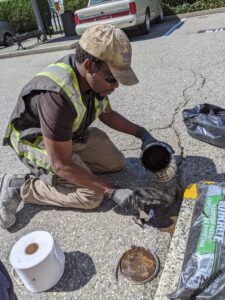
Carbonation depth is measured during a concrete condition assessment by applying phenolphthalein indicator solution to a freshly broken concrete surface. Carbonated concrete (pH below 9) remains colourless while uncarbonated concrete turns bright pink. By measuring the depth of the colourless zone, the assessor determines how close the carbonation front is to the rebar. If the carbonation depth exceeds the concrete cover depth, active corrosion is likely occurring.
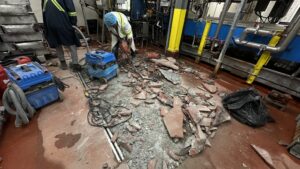
This measurement is a standard component of any professional concrete condition assessment for a parkade or aging concrete structure. It helps prioritize repair areas and determine whether corrosion is already active or approaching. Our concrete spalling repair team incorporates carbonation testing into all condition assessments.
Carbonation and Parkade Waterproofing
While carbonation cannot be reversed once it has occurred, its progression can be significantly slowed by maintaining a dry concrete environment — which is precisely what a properly functioning parkade waterproofing membrane achieves. When the waterproofing membrane fails and moisture begins infiltrating the concrete slab, carbonation-induced corrosion accelerates dramatically.
This is why parkade waterproofing is not just about keeping the floor dry — it is about protecting the structural integrity of the reinforced concrete below. Restoring the membrane before carbonation-induced corrosion becomes widespread is the most cost-effective way to manage this risk. See our parkade resurfacing services and our FAQ for more on how carbonation testing informs repair planning.
Contact Miyagi Construction for a free site assessment at estimate@miyagiconstruction.com or call (778) 513-7471.
Additional Resources
For more information on concrete standards and construction safety in British Columbia, visit BC Construction Safety Alliance and the CSA Group for industry standards and guidelines.
Get a Free On-Site Assessment
Tell us about your project and we'll get back to you within 24 hours. No obligation, no pressure.