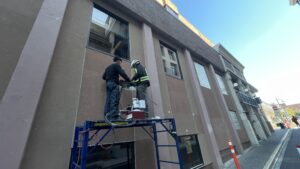
Concrete spalling — where chunks of the surface break away, exposing the aggregate or reinforcing steel beneath — is one of the most common and visible signs of concrete deterioration. In Metro Vancouver’s wet climate, spalling is particularly prevalent in parkades, bridge structures, and exterior concrete elements that experience prolonged moisture exposure.
The Root Causes of Concrete Spalling
Water is the common thread in almost all concrete spalling failures. When water penetrates concrete through cracks, failed sealers, or deteriorated waterproofing, it initiates a cascade of deterioration mechanisms. In colder climates, freeze-thaw cycling causes water in the concrete pores to expand on freezing, gradually fracturing the paste matrix. In Metro Vancouver, this is a factor on elevated structures and open parkade decks during winter frost events.
Rebar corrosion is the most serious cause of spalling. When moisture and oxygen reach embedded steel reinforcement, oxidation begins — and rust occupies significantly more volume than the original steel. This expansion generates outward pressure that fractures and dislodges the concrete cover, creating the characteristic triangular or rectangular spall patterns visible on deteriorated parkade soffits and bridge decks. Miyagi Construction’s concrete repair services address both the corrosion and the structural integrity of the affected zone.
Carbonation and Chloride Attack
Carbonation occurs when carbon dioxide from the atmosphere reacts with calcium hydroxide in the concrete, gradually reducing the pH of the concrete from its normal alkaline state (pH 12–13) to below pH 9. At lower pH, the passive film protecting embedded rebar is destroyed, initiating corrosion. In Metro Vancouver, carbonation typically advances at 1–3 mm per year in normal exposure conditions, meaning older structures are increasingly at risk.
How Concrete Spalling Is Repaired
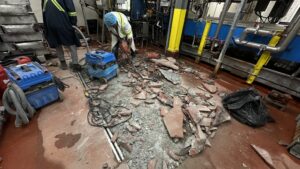
Proper spall repair follows a defined process: full-depth saw cutting around the perimeter of the spalled area to create a clean mechanical edge, removal of all delaminated and deteriorated concrete by jackhammer or scabbler, assessment and treatment of exposed rebar (wire brushing, application of corrosion inhibitor or sacrificial zinc coating), and placement of a compatible polymer-modified repair mortar. The repair must match the substrate in stiffness and thermal movement to avoid re-cracking at the interface. Following repair, a surface-applied waterproofing treatment or membrane prevents recurrence. Learn more about Miyagi’s parkade resurfacing services for comprehensive surface restoration.
FAQ
Is concrete spalling a structural concern?
It depends on the location and extent. Surface spalling without rebar exposure is primarily an aesthetic and durability issue. When spalling reveals corroded rebar or results in significant section loss, it becomes a structural concern that requires engineering assessment before repair.
Can spalling be prevented?
Yes. Maintaining a sound waterproofing membrane on exposed concrete decks, applying penetrating sealers to vertical surfaces, and repairing cracks promptly all significantly reduce the risk of spalling. Annual inspections catch early deterioration before it progresses to spalling.
How long does spall repair last?
A properly executed spall repair using a compatible repair mortar on a well-prepared substrate should last 10–20 years. The longevity depends heavily on whether the underlying cause — typically water infiltration — has been addressed. Repairs without waterproofing restoration will fail prematurely.
What is the cost of concrete spall repair in Metro Vancouver?
Localized spall repairs typically cost $200–$600 per location depending on depth, size, and access. Large-scale spall repair programs on deteriorated parkades or bridges are priced by square foot or square metre of affected area. Contact Miyagi Construction at 604-721-5555 for an accurate assessment.
Get a Free On-Site Assessment
Tell us about your project and we'll get back to you within 24 hours. No obligation, no pressure.