If you own or manage a mid-rise or highrise strata building in Metro Vancouver, there is a reasonable chance your building has a post-tension concrete structure. Understanding the difference between post-tension and conventionally reinforced concrete is important background for anyone making decisions about maintenance, repair, or renovation in these buildings.
Conventional Reinforced Concrete
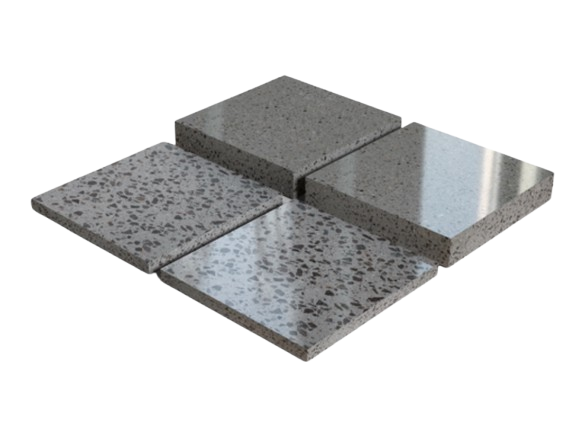
Conventional reinforced concrete uses passive steel reinforcement — rebar — that is placed within the formwork and surrounded by concrete. The rebar works in tension to resist bending forces in the concrete, but it is not pre-stressed — it only activates when the slab deflects under load, developing tensile stress as it does. Conventional reinforced slabs are typically thicker than post-tension slabs of equivalent span, because the passive rebar is less efficient at controlling deflection without additional concrete depth.
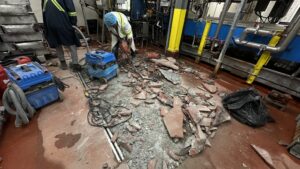
Conventional RC slabs are generally easier to repair and modify than post-tension structures because there are no pre-stressed elements that can cause catastrophic failure if cut. Contractors can core, saw-cut, or break out sections of a conventional slab with standard precautions. Our concrete repair services cover both conventional and post-tension structures.
Post-Tension Concrete: How It Works
Post-tension concrete uses high-strength steel cables (typically 15.2mm 7-wire strand) placed in plastic sheathing within the formwork. After the concrete achieves sufficient strength, these cables are tensioned using hydraulic jacks anchored at the slab edge, and the tensioning force is locked off with wedge anchors. This pre-compression counteracts the tensile stresses that would otherwise develop under load, allowing thinner slabs, longer spans, and reduced column layouts compared to conventional construction of equivalent capacity.
Post-tension systems can be bonded (cables grouted into conduits) or unbonded (cables in plastic sheathing with grease lubrication). The vast majority of post-tension buildings in Metro Vancouver use unbonded PT systems with individual monostrand tendons. This system is efficient and well-suited to floor construction, but creates significant safety considerations for repair work.
Why the Difference Matters for Repairs
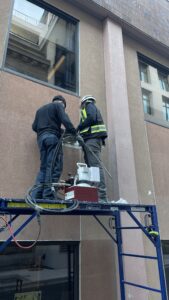
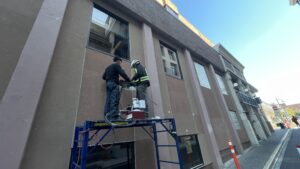
The critical difference for repair work is the energy stored in tensioned cables. A 15.2mm post-tension strand is typically tensioned to 140–160 kN (31,000–36,000 lbs). If an inadvertent cut severs this cable, the stored energy releases explosively — potentially causing the severed cable ends to move violently and causing progressive structural distress if multiple tendons are damaged. This is why all repair, cutting, coring, and anchoring work in post-tension slabs requires prior tendon location survey. Learn more about our specialized post-tension cable repair services. Visit our FAQ for guidance on identifying whether your building has a PT structure.
Contact Miyagi Construction for a free site assessment at estimate@miyagiconstruction.com or call (778) 513-7471.
Additional Resources
For more information on concrete standards and construction safety in British Columbia, visit National Research Council Canada and the CSA Group for industry standards and guidelines.
Get a Free On-Site Assessment
Tell us about your project and we'll get back to you within 24 hours. No obligation, no pressure.