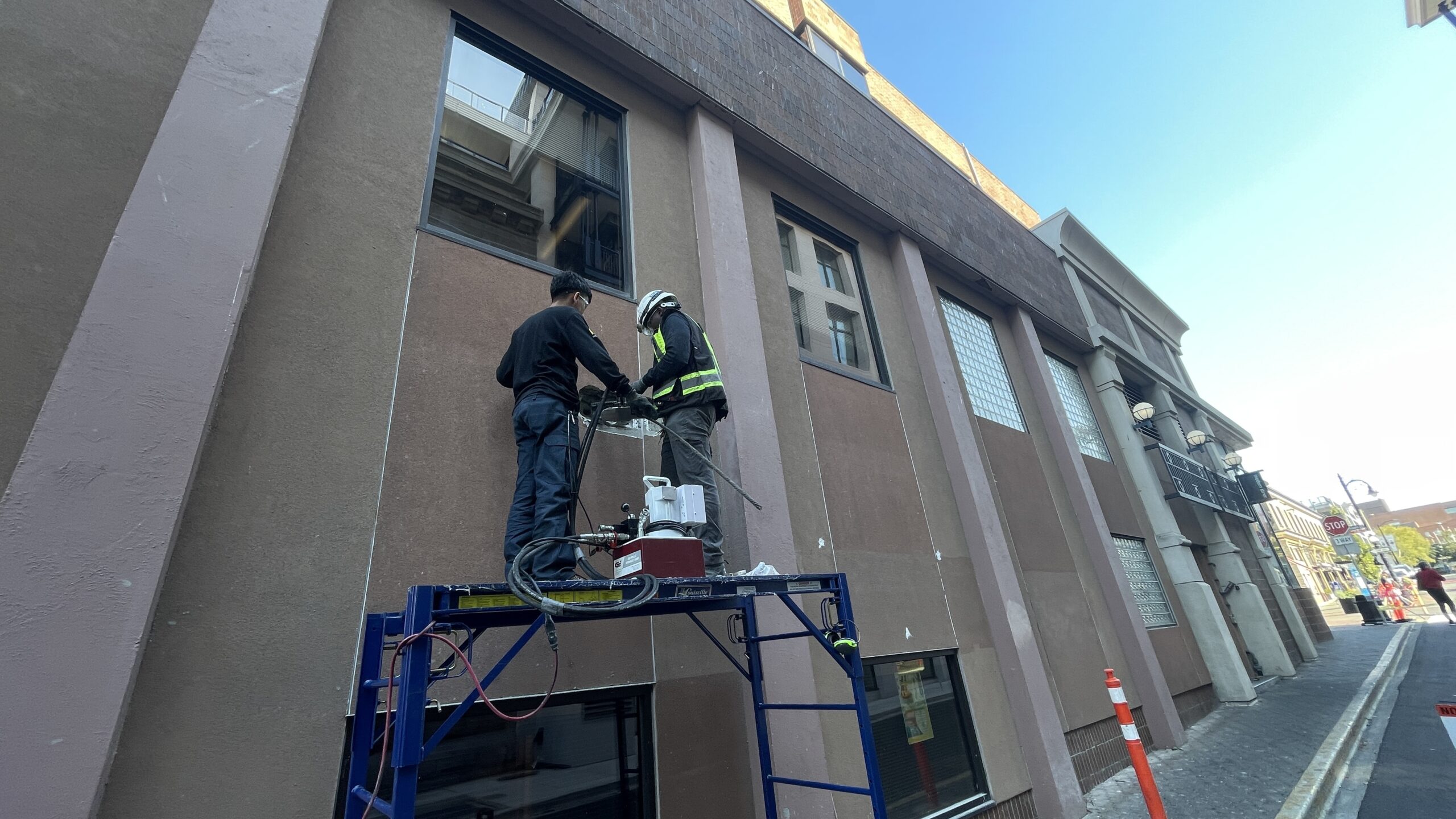
Post-Tension Cable Repair Vancouver: Everything You Need to Know
Post-tensioned concrete is widely used in Metro Vancouver parkades, podium slabs, and high-rise structures due to its efficiency in spanning large areas with thinner slabs. However, when post-tension cables are damaged or corroded, the structural consequences can be serious. Understanding how post-tension systems work, the warning signs of failure, and what the repair process involves is critical for anyone managing or owning property with this type of structure.
What Are Post-Tension Cables and Why Do They Fail?
Post-tensioned concrete uses high-strength steel tendons (cables) threaded through ducts in the concrete slab or beam. After the concrete cures, the cables are tensioned using hydraulic jacks and anchored at each end, placing the concrete in compression. This compression counteracts the tensile forces that would otherwise cause cracking under load.
Cable failures typically result from:
- Corrosion: Water infiltration — particularly from chloride-laden water in parkade environments — corrodes the high-strength steel. Post-tension cables are especially susceptible because the steel operates under high stress, making it vulnerable to stress corrosion cracking.
- Anchor pocket deterioration: The pocket where the cable is anchored at the slab edge is a common entry point for water. Poorly sealed or damaged pockets lead to localized corrosion of the anchor plate and wedges.
- Mechanical damage: Drilling or coring through a slab without locating cables first can sever a tendon.
- Insufficient concrete cover: Inadequate cover over the duct system allows carbonation and chloride ingress to reach the cable.
Warning Signs of Post-Tension Cable Damage
Early identification of post-tension issues can prevent catastrophic failure. Watch for:
- Rust staining at slab edges or on soffit surfaces, particularly near anchor pockets
- Cracking radiating from anchor pocket locations
- Concrete spalling or delamination near the slab perimeter
- Unusual deflection or sagging in the slab
- Audible “pinging” sounds that may indicate sudden tendon failure
If any of these signs are observed, the area should be secured immediately and a qualified structural engineer engaged to assess the severity.
Learn more about our post-tension cable repair services in Vancouver.
The Post-Tension Cable Repair Process
Post-tension cable repair is highly specialized work that must be carried out by experienced contractors familiar with the relevant standards (CSA A23.3, VSL, and others). The general process includes:
- Structural engineering assessment to confirm the scope and determine whether load redistribution or temporary shoring is required
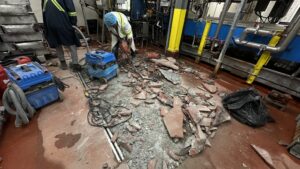
- Careful concrete removal around the damaged cable using hand tools to avoid damaging adjacent tendons
- Detensioning and cutting of the damaged cable segment
- Installation of a replacement tendon or coupler system, and re-stressing to the specified load
- Anchor pocket sealing and concrete reinstatement
- Application of protective coating or sealant to prevent future water ingress
Choosing a Post-Tension Repair Contractor in Vancouver
Not all concrete contractors are qualified to work on post-tensioned structures. Ensure your contractor has verifiable experience with post-tension repair, works with licensed structural engineers, and carries appropriate insurance and WorkSafeBC compliance.
Miyagi Construction has the expertise and track record to handle post-tension cable repairs safely and effectively across Metro Vancouver. Contact us at estimate@miyagiconstruction.com for a consultation.
Additional Resources
For more information on concrete standards and construction safety in British Columbia, visit National Research Council Canada and the CSA Group for industry standards and guidelines.
Get a Free On-Site Assessment
Tell us about your project and we'll get back to you within 24 hours. No obligation, no pressure.