Post-tensioned concrete is widely used in parkades, podium decks, and multi-storey structures throughout Metro Vancouver. The system allows thinner slabs to span longer distances by keeping the concrete under continuous compression from tensioned steel cables. When those cables are compromised, the consequences can be serious — and repair requires specialized expertise.
How Post-Tension Systems Work
In a post-tensioned slab, high-strength steel tendons are threaded through plastic sheathing and anchored at the edges of the slab. After the concrete cures, hydraulic jacks tension the cables to a specified load — typically 33,000 lbs or more per tendon — and lock them off at the anchorage. This permanent compression counteracts the tensile stresses caused by loads, allowing the concrete to behave as if it is much stronger than its compressive strength alone would allow.
Why Post-Tension Cables Fail
The most common cause of post-tension cable failure in Metro Vancouver is corrosion. When parkade waterproofing fails and water infiltrates the slab, moisture reaches the cable sheathing — and if the sheathing is damaged or the end anchorage is exposed, the cable is vulnerable to corrosion. Chloride contamination from de-icing salts (less common in Vancouver but present in some applications) accelerates this process dramatically. Mechanical damage from drilling or cutting during renovations is another cause. A single broken tendon can redistribute load to adjacent cables, potentially triggering progressive failure. Visit our post-tension cable repair service page for more information.
Signs That Post-Tension Repair Is Needed
Warning signs include visible cable ends protruding from the slab edge, rust staining at anchorage zones, concrete cracking in patterns inconsistent with normal shrinkage, deflection or sagging in the slab, and pop-out failures near cable locations. Any of these signs warrants immediate professional assessment. Post-tension failures are a structural safety issue — not just a maintenance item. Our concrete repair team works with structural engineers to assess and restore post-tensioned systems safely.
The Repair Process
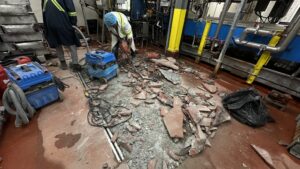
Post-tension cable repair typically involves exposing the failed tendon, removing deteriorated concrete around the cable, splicing or replacing the tendon section, re-tensioning to specified loads, grouting the duct, and restoring the concrete surface. All work must be performed under engineering supervision with documentation of tensioning forces. The repaired area is then waterproofed to prevent recurrence.
FAQ
Is a post-tension repair an emergency?
Broken or severely corroded tendons should be treated urgently. A structural engineer should assess the slab to determine whether the affected area requires load restrictions or shoring while repairs are planned. Do not delay assessment if you observe warning signs.
How long does post-tension cable repair take?
A localized repair involving 1–3 tendons typically takes 3–5 days including concrete restoration. Larger repairs with multiple cable failures or significant concrete removal may take 2–3 weeks. Engineering review and material procurement can add lead time.
Can post-tension repairs be done on occupied buildings?
Yes, with appropriate work zone protection and coordination. Re-tensioning creates temporary noise and vibration, and specific areas may require temporary access restrictions. Miyagi Construction coordinates closely with building managers to minimize disruption.
How do I know if my parkade is post-tensioned?
Look for anchor pockets or cast-in blockouts at the slab edges — usually filled with grout or covered with metal caps. The original structural drawings will confirm the system. If unsure, contact a structural engineer or a specialized contractor for a visual inspection.
Get a Free On-Site Assessment
Tell us about your project and we'll get back to you within 24 hours. No obligation, no pressure.