The terms “positive side” and “negative side” waterproofing describe where a waterproofing system is applied relative to the water pressure acting on a concrete structure. Understanding this distinction is fundamental to selecting the right waterproofing approach for any project — and choosing incorrectly can result in system failure regardless of how well the actual waterproofing material is installed.
Positive Side Waterproofing
Positive side waterproofing (also called “above-grade” waterproofing or “face-side” waterproofing) is applied on the same side of the structure as the water source — between the water and the concrete. For a parkade deck, this means the membrane on the top surface of the slab, between the surface exposure and the concrete below. For a below-grade wall, this means waterproofing applied to the exterior (soil-side) face, between the soil and the wall.
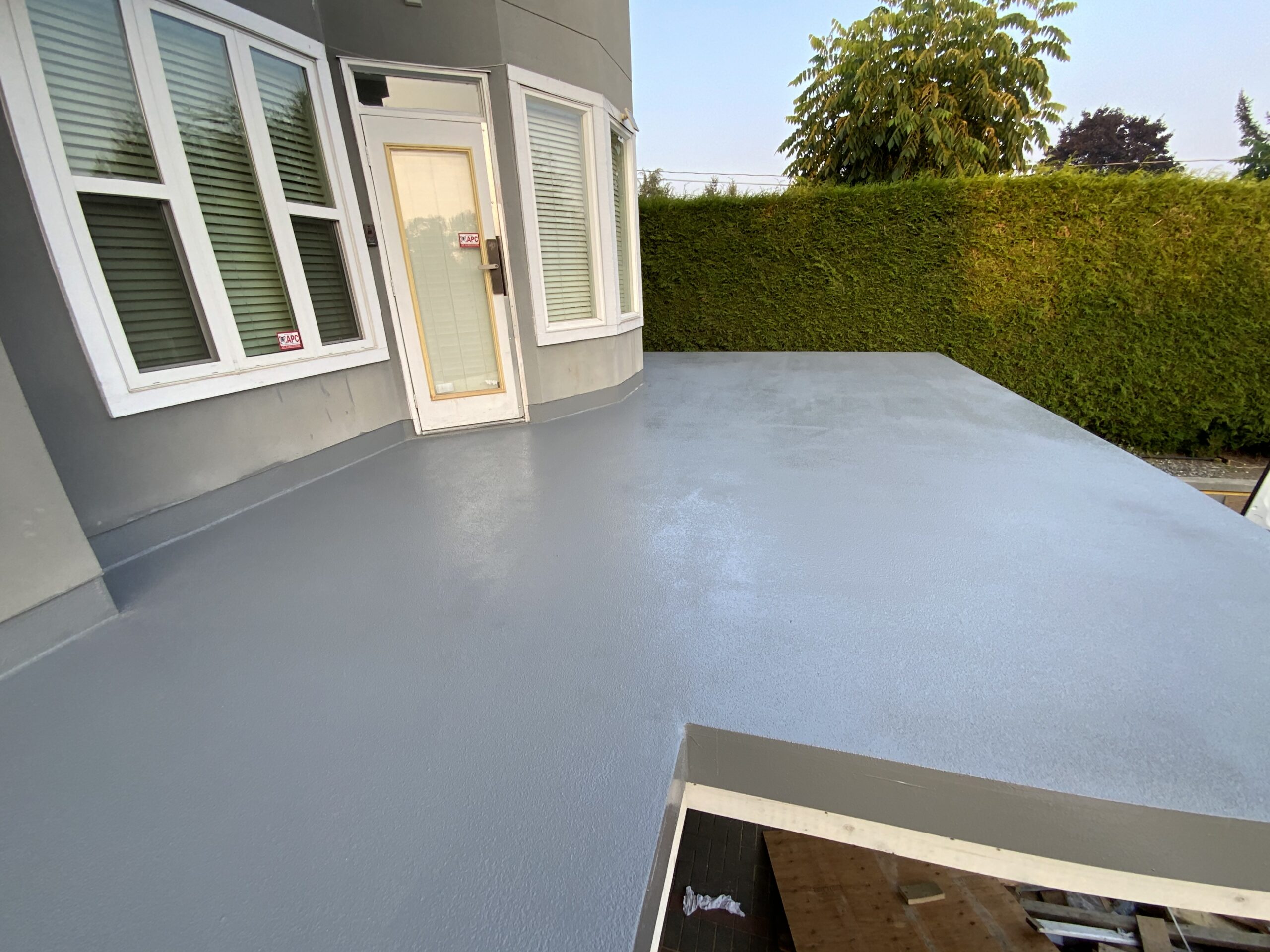
Positive side waterproofing is the technically preferred approach in almost all cases. By placing the waterproofing on the water-pressure side of the structure, you prevent water from entering the concrete entirely — protecting both the concrete durability and any structure on the interior side. Positive side systems benefit from direct adhesion to the substrate without competing hydrostatic pressure, and any membrane failure is detectable from the water-pressure side. Our parkade waterproofing services are positive-side membrane systems applied to the traffic surface of parkade decks.
Negative Side Waterproofing
Negative side waterproofing is applied on the interior face of a structure — opposite to the water pressure side. It is a remedial approach used when positive side application is impractical (typically because excavation to access the exterior of a below-grade wall is not feasible). Common negative side systems include cementitious coatings, crystalline waterproofing treatments, and interior drainage systems with sumps.
Negative side systems work by intercepting infiltrating water at the interior surface and either blocking it, channeling it to drainage, or chemically reacting with it to form crystals that block the water pathway. The limitation is that the concrete itself remains wet — the waterproofing does not protect the concrete from moisture, only the interior space from water intrusion. This means that concrete and rebar deterioration due to moisture may continue even where negative side waterproofing is performing well from a drainage perspective.
Choosing the Right Approach for Your Project
For new construction and for projects where access allows, positive side waterproofing should always be specified. For existing below-grade structures where exterior access is impractical, negative side systems represent the practical alternative. In many Vancouver parkade restoration projects, the solution combines positive side (deck membrane replacement) with negative side (injection grouting of construction joints and cracks in walls) to address water infiltration from all directions. See our concrete repair services for structural work associated with waterproofing restoration, and our FAQ for more on choosing the right waterproofing approach.
Contact Miyagi Construction for a free site assessment at estimate@miyagiconstruction.com or call (778) 513-7471.
Additional Resources
For more information on concrete standards and construction safety in British Columbia, visit WorkSafeBC and the CSA Group for industry standards and guidelines.
Get a Free On-Site Assessment
Tell us about your project and we'll get back to you within 24 hours. No obligation, no pressure.