When a concrete parking lot in Metro Vancouver reaches the point of needing significant repair, property owners often face a fundamental decision: invest in concrete restoration, or convert to asphalt. This is a genuine strategic choice with significant financial implications, and the right answer depends on the specific condition of the existing concrete, the owner’s investment horizon, and the long-term maintenance cost profile they are willing to accept.
The Case for Repairing Concrete
Concrete parking lots, when properly repaired and maintained, have a service life that far exceeds asphalt — typically 30–40 years versus 15–20 years for asphalt. Concrete does not require the periodic resurfacing that asphalt needs every 7–10 years, and it is significantly more resistant to the deformation (rutting) that develops in asphalt under heavy vehicle loading. Concrete also withstands fuel and oil contamination better than asphalt, which can soften and deform under hydrocarbon exposure.
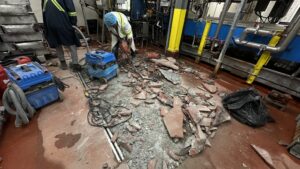
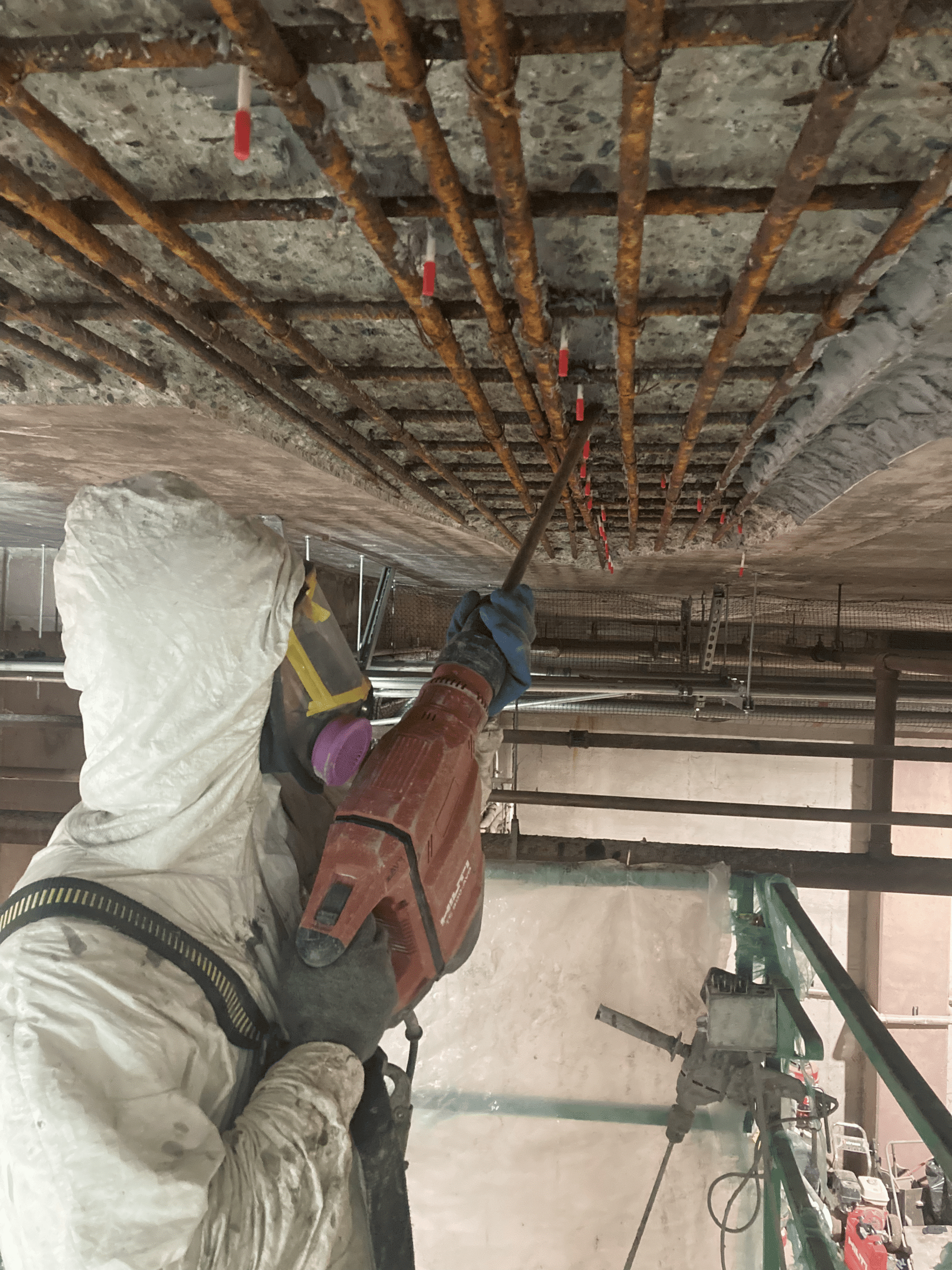
The argument for concrete repair is strongest when the existing slab is structurally sound with surface deterioration (scaling, joint failure) that can be addressed without slab replacement. Our concrete repair services address joint restoration, surface repair, and structural patching that can extend the service life of a concrete parking lot by 15–20 years at significantly lower cost than replacement.
The Case for Converting to Asphalt
The primary advantage of asphalt is its lower initial cost — asphalt parking lot installation typically costs 30–50% less per square foot than concrete construction. For property owners with shorter investment horizons or tighter capital budgets, asphalt’s lower upfront cost may outweigh its higher lifecycle maintenance costs.
Conversion to asphalt is most compelling when the existing concrete slab has widespread structural deterioration — deep cracking, significant differential settlement, or slab failure over multiple panels — that would require full slab replacement to properly repair in concrete. In these cases, the cost of full concrete replacement may exceed the cost of asphalt installation by a margin that is difficult to justify.
A Lifecycle Cost Framework for the Decision
The most rigorous way to make this decision is through lifecycle cost analysis — comparing the total cost of each option over a defined period (typically 20–30 years) including initial installation or repair cost, periodic maintenance costs, and end-of-period replacement cost. Over a 30-year horizon, properly maintained concrete typically has a lower total cost than asphalt, even accounting for asphalt’s lower initial cost.
Our team helps Vancouver commercial property owners develop this analysis for their specific situation. See our surface restoration services and our FAQ for more guidance on parking lot repair decisions in Metro Vancouver.
Contact Miyagi Construction for a free site assessment at estimate@miyagiconstruction.com or call (778) 513-7471.
Additional Resources
For more information on concrete standards and construction safety in British Columbia, visit BC Construction Safety Alliance and the CSA Group for industry standards and guidelines.
Get a Free On-Site Assessment
Tell us about your project and we'll get back to you within 24 hours. No obligation, no pressure.