Epoxy floor coatings are one of the most popular choices for commercial and industrial floors in Metro Vancouver — and for good reason. They offer excellent chemical resistance, easy cleaning, and a professional appearance. But like any flooring system, their lifespan depends heavily on installation quality, substrate preparation, traffic levels, and maintenance practices.
Factors That Affect Epoxy Floor Longevity
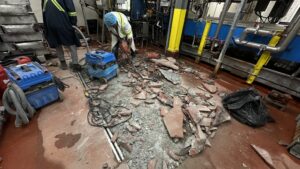
Surface preparation is the single most important factor in epoxy coating durability. Coatings applied over inadequately prepared concrete — or concrete with high moisture vapour emission — will delaminate prematurely, often within 1–3 years. Proper preparation includes shot blasting or diamond grinding to achieve the correct surface profile, moisture testing, and repair of any cracks or spalls before coating application.
Traffic type and frequency also play a major role. A distribution warehouse with constant forklift traffic will wear through a standard epoxy system much faster than a clean-room pharmaceutical facility. The coating system should be specified to match the actual use conditions — including chemical exposure, point loads, and abrasion levels. Concrete polishing is sometimes a better long-term solution for very high-traffic environments.
Epoxy vs. Polyaspartic vs. Polyurethane
Standard epoxy coatings are the base layer in most commercial systems — they bond well to concrete and provide excellent build. However, epoxy is sensitive to UV light and will amber or chalk on exterior or naturally lit surfaces. A polyurethane or polyaspartic topcoat adds UV stability, flexibility, and additional abrasion resistance — extending the overall system life by 3–5 years compared to epoxy alone. Polyaspartic topcoats also cure faster, reducing downtime. Miyagi Construction’s concrete flooring services include properly specified multi-coat systems for commercial applications.
Maintenance Practices That Extend Lifespan
Regular sweeping and mopping with pH-neutral cleaners, prompt cleanup of chemical spills, and avoidance of sharp metal objects dragging across the surface all extend coating life significantly. Annual inspections to catch and touch up small chips or abraded areas before they propagate can add years to a floor system. Re-coating the topcoat layer every 5–7 years — rather than stripping and recoating the full system — is a cost-effective way to maintain appearance and protection.
FAQ
Can epoxy floors be recoated without stripping the existing coating?
Yes, if the existing coating is well-bonded and the surface is properly prepared. Delaminated, blistered, or contaminated coatings must be removed. A thorough assessment determines whether re-coating or full replacement is the right approach.
Does epoxy work in cold or damp environments like parkades?
Epoxy requires minimum application temperatures — typically 10–15°C — and low moisture vapour emission from the concrete. For parkades and exterior-exposed areas, moisture-tolerant epoxy primers and polyurethane or polyaspartic topcoats are specified. Standard residential epoxy kits are not suitable for commercial or parkade environments.
How soon can I use the floor after epoxy coating?
Most commercial epoxy systems allow light foot traffic in 24 hours and vehicle traffic in 72 hours at normal temperatures. Full chemical resistance is achieved in 7 days. Faster-curing polyaspartic systems can allow foot traffic in as little as 2–4 hours.
What is the cost of commercial epoxy floor coating in Vancouver?
Commercial epoxy floor systems in Metro Vancouver typically cost $5–$15/sq ft for a multi-coat system, depending on surface preparation requirements, system specification, and area size. Get a free assessment from Miyagi Construction by calling 604-721-5555.
Get a Free On-Site Assessment
Tell us about your project and we'll get back to you within 24 hours. No obligation, no pressure.