Crystalline waterproofing is a specialized technology that uses reactive chemicals within the concrete to form crystals that block water pathways — creating a waterproofing effect that is integral to the concrete rather than applied as a surface coating or membrane. Understanding how crystalline systems work, where they are most appropriate, and their limitations compared to conventional membrane waterproofing helps building owners and strata councils make informed decisions about waterproofing restoration options.
How Crystalline Waterproofing Works
Crystalline waterproofing systems contain active chemicals — typically Portland cement, silica sand, and proprietary reactive chemicals — that react with free lime and moisture within the concrete to form insoluble calcium silicate hydrate crystals. These crystals grow within the capillary pores and microcracks of the concrete, physically blocking the pathways through which water would otherwise pass.
The crystalline reaction is self-sealing and self-healing in a limited sense — if a concrete structure that has been treated with crystalline waterproofing develops new microcracks, the presence of the active chemicals within the concrete allows new crystal growth to seal the cracks, provided moisture and oxygen are available to drive the reaction. This self-sealing characteristic is one of the key differentiators of crystalline systems from conventional membrane waterproofing. Our concrete restoration team uses crystalline products in appropriate applications.
Applications Where Crystalline Waterproofing Is Well-Suited
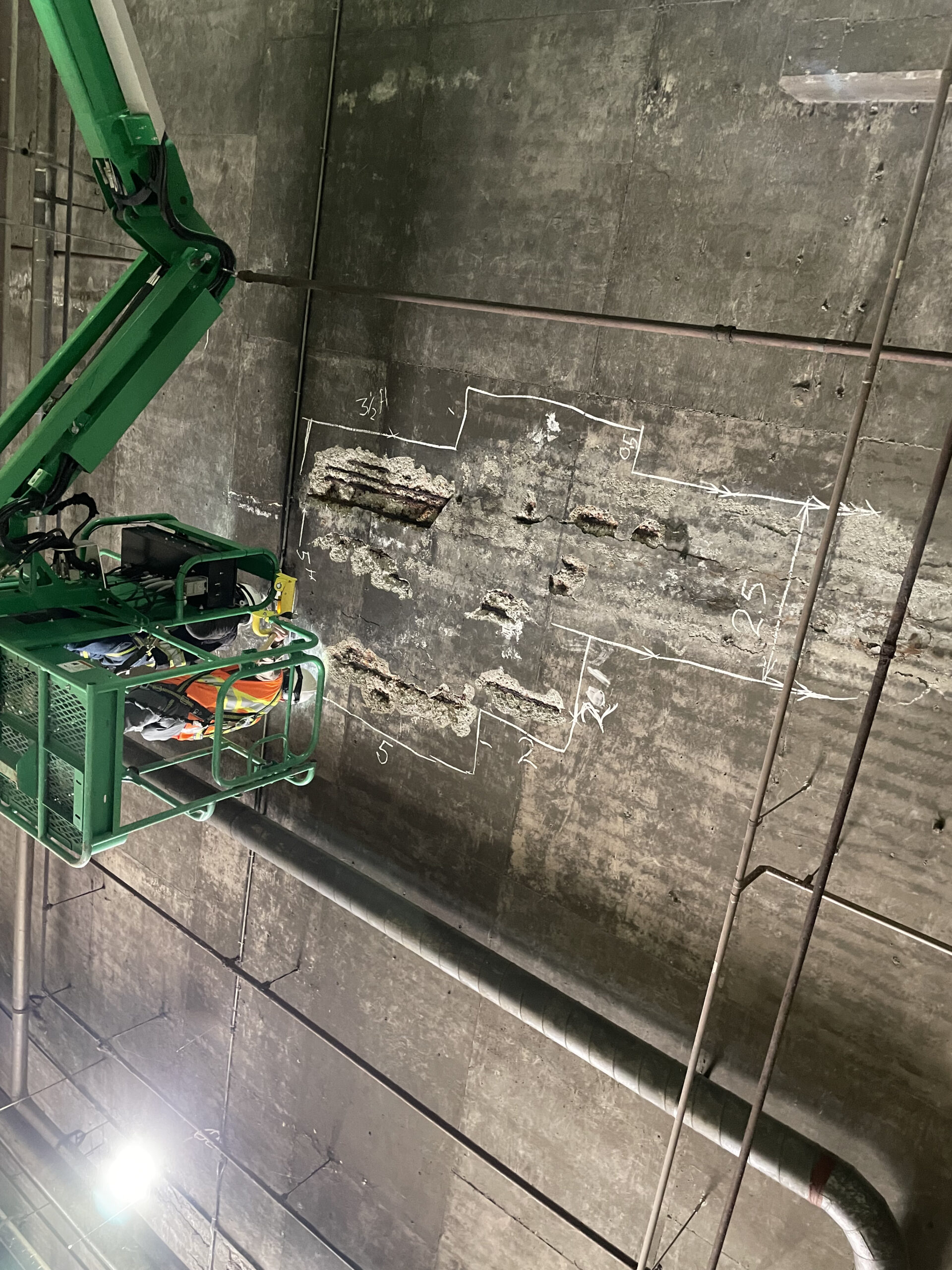
Crystalline waterproofing is particularly effective in several specific applications. As a negative side (interior) treatment for below-grade concrete walls and slabs where exterior waterproofing has failed and excavation is not practical, crystalline coatings can significantly reduce water infiltration through the concrete body. As an admixture in concrete repair mortars used to patch cracks and spalled areas, crystalline additives improve the moisture resistance of the repair itself. As a coating at specific details — waterstops, construction joints, and pipe penetrations — crystalline products provide targeted protection at common leakage points.
Crystalline products are less appropriate as a replacement for traffic-bearing membrane systems on parkade decks — they do not provide the tough, vehicular-traffic-resistant wear surface that a proper parkade membrane system requires, and they are more sensitive to large crack widths that exceed the self-healing capacity of the crystal growth.
Crystalline vs Membrane Systems: Making the Right Choice
For above-grade parkade deck applications where a traffic-bearing, physically durable waterproofing surface is required, conventional membrane systems (polyurethane, hot rubber, modified bitumen) are the correct choice — not crystalline coatings. For below-grade wall remediation, construction joint sealing, and concrete repair mortar enhancement, crystalline products offer unique advantages that conventional membranes cannot match. See our parkade waterproofing services for membrane systems, and our FAQ for guidance on choosing the right waterproofing approach for your specific situation.
Contact Miyagi Construction for a free site assessment at estimate@miyagiconstruction.com or call (778) 513-7471.
Additional Resources
For more information on concrete standards and construction safety in British Columbia, visit WorkSafeBC and the CSA Group for industry standards and guidelines.
Get a Free On-Site Assessment
Tell us about your project and we'll get back to you within 24 hours. No obligation, no pressure.