Bridges and elevated concrete structures in BC face some of the most severe exposure conditions of any concrete application — constant traffic loading, deicing salt application and runoff, seasonal freeze-thaw cycling, and in coastal locations, marine salt exposure. Concrete repair on these structures requires specialized knowledge of structural behavior, repair material requirements, and the safety protocols necessary for working on live or recently closed traffic structures.
Why Bridge Concrete Deteriorates
The dominant deterioration mechanism in BC bridges and elevated highway structures is chloride-induced rebar corrosion, driven by decades of deicing salt application. Chloride ions penetrate the concrete deck and substructure elements over time, eventually reaching the reinforcing steel and initiating corrosion that causes spalling and section loss. In Metro Vancouver’s Lower Mainland, many concrete bridges constructed in the 1950s through 1980s now have significant chloride contamination throughout their deck and substructure concrete.
Carbonation also plays a role in older structures, particularly in substructure elements (piers, abutments, wingwalls) where carbonation progresses from exposed surfaces. Alkali-silica reaction (ASR) — a chemical reaction between certain reactive aggregates and the alkalis in cement paste — causes map cracking and gel exudation in some older BC structures, requiring specialized assessment and repair approaches. Our concrete repair services cover bridge and infrastructure repair for appropriate project scales.
Bridge Deck Restoration
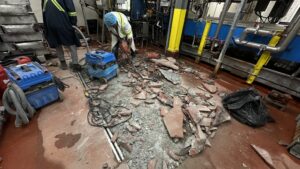
Bridge deck restoration typically involves saw-cutting and removing all delaminated concrete, treating or replacing corroded rebar, and restoring the deck profile with a structural repair mortar or latex-modified concrete. The repaired deck is then typically protected with a waterproofing membrane or penetrating sealer to prevent further chloride ingress. Traffic management during deck repair — maintaining at least partial traffic flow on most structures — is a significant project constraint that affects work phasing and duration.
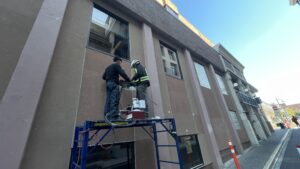
Our team has experience with elevated structure concrete repair under live traffic conditions, including the use of formwork and shoring to repair substructure elements while maintaining vehicular clearances above. All bridge repair work proceeds under the direction of a structural engineer with bridge-specific expertise.
Substructure and Foundation Concrete Repair
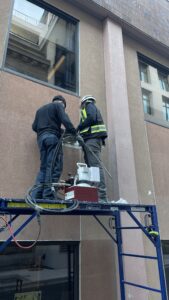
Bridge pier and abutment repair often involves working in constrained, difficult-access locations — at or below water level, in tight urban environments, or at heights requiring specialized access equipment. We develop detailed access plans for each substructure repair project and hold required WorkSafeBC certifications for working at heights and over water. See our elevated structure restoration services and our FAQ for more on BC bridge concrete repair.
Contact Miyagi Construction for a free site assessment at estimate@miyagiconstruction.com or call (778) 513-7471.
Additional Resources
For more information on concrete standards and construction safety in British Columbia, visit National Research Council Canada and the CSA Group for industry standards and guidelines.
Get a Free On-Site Assessment
Tell us about your project and we'll get back to you within 24 hours. No obligation, no pressure.