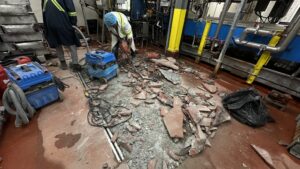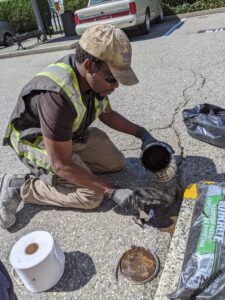

Concrete polishing produces one of the most durable and attractive commercial floor finishes available — but the quality of the final polished surface depends almost entirely on the quality of the grinding preparation that precedes it. Understanding the concrete grinding phase of a polishing project helps you ask the right questions and set appropriate expectations before your Vancouver commercial floor project begins.
Why Grinding Is the Foundation of a Great Polish
Concrete polishing is a progressive abrasive process — moving from coarse to fine diamond tooling to progressively refine the concrete surface until the desired sheen level is achieved. Grinding with coarse diamonds is the first and most material-removing phase of this process. It removes surface laitance (the weak, porous layer at the top of a concrete slab), opens the concrete surface to accept densifier, levels out any surface variation, and exposes the aggregate or cream finish that will ultimately define the appearance of the polished floor.
If the grinding phase is rushed or improperly executed — using too-fine an initial grit for the surface condition, failing to achieve a flat surface, or leaving scratch patterns from misaligned tooling — every subsequent step will be compromised. You cannot polish out problems that were created in the grinding phase. This is why experienced polishing contractors invest significantly in the grinding phase even though it is the least visually impressive part of the project.
Grinding Equipment and Diamond Tooling
Commercial concrete polishing uses planetary grinding machines with rotating diamond segment tooling. The machines are available in single-head and multi-head configurations — multi-head machines provide more uniform surface contact and better flatness control on large commercial floors. The diamond tooling is specified by grit size (16-grit to 120-grit for grinding phases) and bond hardness (soft, medium, or hard bonds matched to the hardness of the concrete being ground).
Matching diamond bond hardness to concrete hardness is critical for efficient cutting. The wrong bond selection results in glazing (diamonds load up and stop cutting) or rapid wear (diamonds release too quickly). Experienced contractors assess concrete hardness before specifying tooling. Our concrete polishing team uses professional-grade planetary equipment and matched diamond tooling for all projects.
Wet vs Dry Grinding for Polishing
The early grinding phases of concrete polishing are sometimes performed wet (with water as a coolant and dust suppressant) or dry (with dust collection systems). Dry grinding with HEPA vacuum systems is the industry standard for most commercial projects — it produces better flatness control and eliminates slurry cleanup. Water grinding is sometimes used for the coarsest initial cuts on very hard concrete. See our industrial floor coating services for related floor finishing options, and check our FAQ for more on polished concrete project planning.
Contact Miyagi Construction for a free site assessment at estimate@miyagiconstruction.com or call (778) 513-7471.
Additional Resources
For more information on concrete standards and construction safety in British Columbia, visit BC Construction Safety Alliance and the CSA Group for industry standards and guidelines.
Get a Free On-Site Assessment
Tell us about your project and we'll get back to you within 24 hours. No obligation, no pressure.