Not all concrete cracks are created equal. Some are cosmetic — hairline surface cracks caused by normal shrinkage during concrete curing that have no effect on structural performance. Others indicate serious structural distress that requires immediate engineering attention. Knowing how to interpret what you are seeing — and when to call a professional — is important knowledge for strata councils and property managers responsible for aging concrete structures.
Non-Structural Concrete Cracks
Non-structural cracks in concrete are those that do not affect the load-carrying capacity of the structure. The most common type is plastic shrinkage cracking, which occurs during the curing process when the concrete surface dries faster than the interior, causing tensile stresses that exceed the fresh concrete’s limited strength. These cracks are typically shallow (not full-depth), random in pattern, and relatively fine (under 0.3mm width).
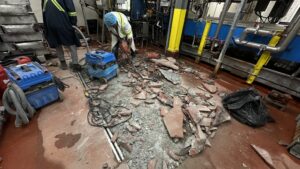
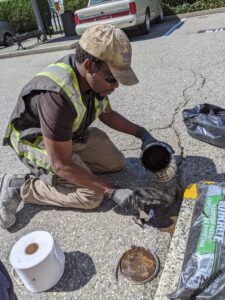
Settlement cracking and thermal movement cracking can also be non-structural if they are stable, have not caused significant displacement, and are not providing a pathway for significant moisture infiltration. However, even non-structural cracks in a parkade environment should be sealed — an unsealed crack of any width in a parkade deck provides a direct pathway for water and chlorides to reach reinforcing steel. Our concrete repair services include crack sealing for both structural and cosmetic applications.
Structural Concrete Cracks
Structural cracks are those that indicate a problem with the load-carrying system of the structure. Warning signs that a crack may be structural include: width greater than 0.3mm (enough to admit a credit card edge); active growth — the crack is widening over time; displacement — one side of the crack is higher or lower than the other (step cracking); pattern suggesting flexural or shear failure (diagonal cracks at 45 degrees near supports, or wide cracks at mid-span); and cracks accompanied by visible deflection or distortion of the structural element.
If you observe any of these characteristics in a crack in your parkade or building structure, immediate engineering consultation is warranted. Do not attempt to seal or repair a structurally significant crack without first understanding its cause — sealing a crack in a moving structure will simply cause the sealant to fail and may mask a progressing structural problem.
Active vs Dormant Cracks and Repair Methods
The distinction between active (still moving) and dormant (stable) cracks is critical for selecting the right repair material. Active cracks require flexible repair materials — polyurethane sealants or flexible epoxies — that can accommodate continued movement. Dormant cracks can be filled with rigid epoxy injection, which restores structural continuity across the crack.
Determining whether a crack is active or dormant typically requires monitoring it over a period of time or reviewing its history with the building’s maintenance records. Our team assesses crack status as part of every concrete condition assessment. See our parkade resurfacing services and FAQ for more information on crack monitoring and repair.
Contact Miyagi Construction for a free site assessment at estimate@miyagiconstruction.com or call (778) 513-7471.
Additional Resources
For more information on concrete standards and construction safety in British Columbia, visit National Research Council Canada and the CSA Group for industry standards and guidelines.
Get a Free On-Site Assessment
Tell us about your project and we'll get back to you within 24 hours. No obligation, no pressure.