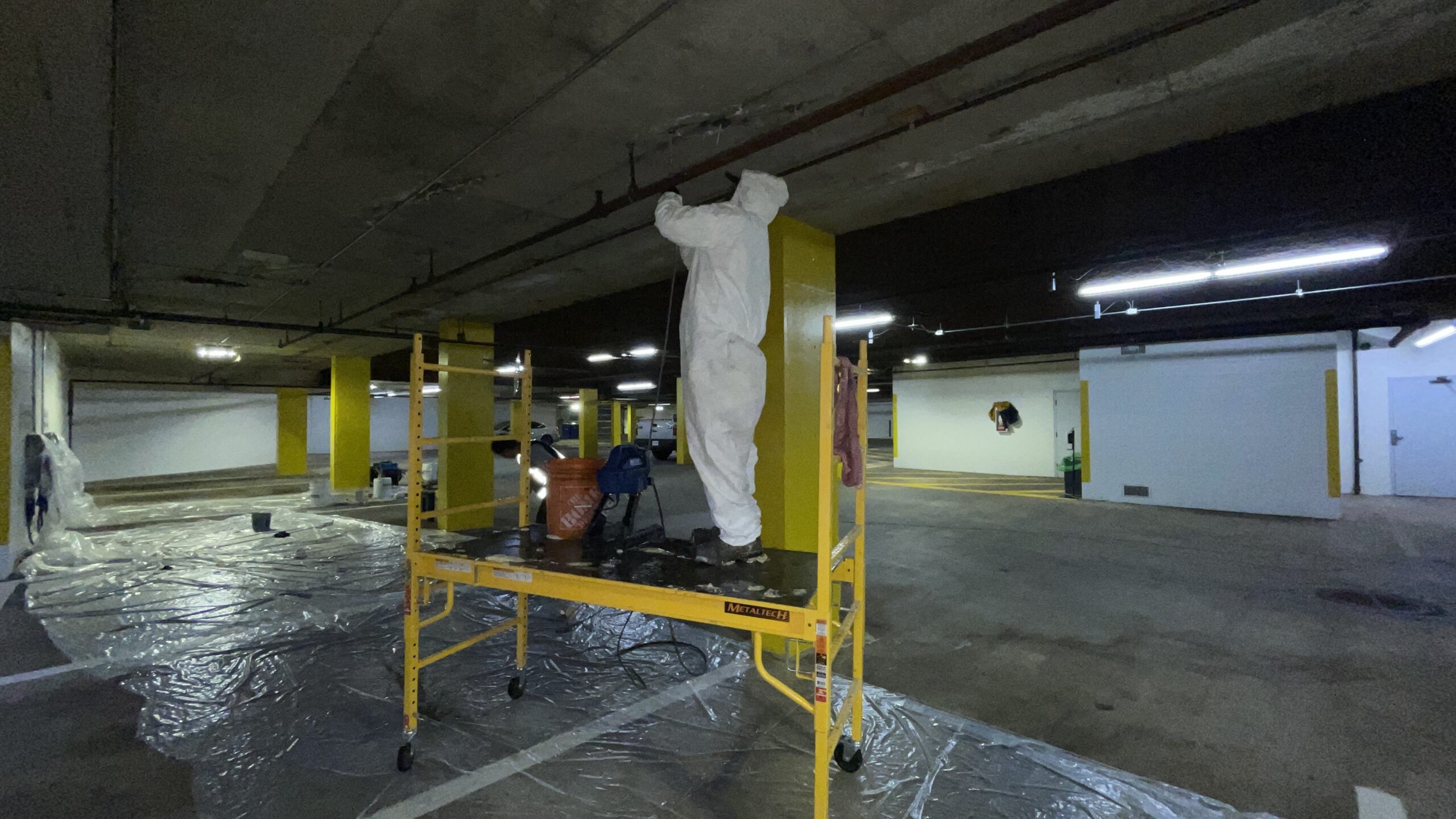
Glass railings have become the standard for balcony and terrace enclosures in Metro Vancouver’s newer strata developments — they provide unobstructed views, a contemporary appearance, and relatively low maintenance compared to traditional metal and wood railings. However, the base detail where glass railing systems meet the concrete balcony deck is one of the most common waterproofing failure locations in Vancouver strata buildings, and understanding why helps owners and strata councils address these issues effectively.
Why Glass Railing Base Details Fail
Glass railing systems are typically anchored to the balcony deck using one of two methods: core-drilled anchor bolt installations (where anchors are set into holes drilled through the deck) or surface-mounted base channels (which are anchored to the deck surface and rely on sealant at the base perimeter). Both methods create challenges for balcony deck waterproofing.
Core-drilled anchors penetrate the waterproofing membrane and the concrete slab. If the penetration is not properly flashed and sealed at the time of installation — or if the original sealant has degraded over time — every anchor becomes a direct pathway for water to enter the concrete. Over thousands of rain events, even a small gap around an anchor bolt allows significant water infiltration that can initiate rebar corrosion in the immediate vicinity of every anchor. On a typical balcony with 6–10 railing posts and 2–4 anchors per post, this can represent 20–40 individual water infiltration points.
Surface-Mounted Channel Base Details
Surface-mounted glass railing base channels avoid the penetration issue but introduce a different challenge: the channel sits on top of the membrane, with sealant applied at the perimeter to prevent water infiltration beneath. This sealant is exposed to UV, thermal cycling, and the movement of the channel under wind loading on the glass. Sealant at railing base channels typically begins to fail within 7–15 years, allowing water to infiltrate beneath the channel where it is trapped against the membrane and eventually finds a path through any membrane weakness.
Repairing Railing-Related Waterproofing Failures
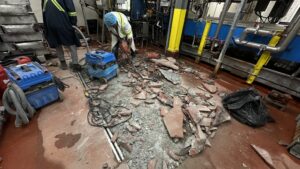
Addressing glass railing-related waterproofing failure requires removing the railing system, repairing any concrete damage at anchor locations (including delamination and rebar corrosion around anchor holes), installing new waterproofing membrane with proper flashing at all anchor penetrations, and reinstalling the railing system with correct sealing details. Our concrete repair team works with railing installers to coordinate membrane and structural repairs with railing reinstallation.
For strata buildings with glass railings approaching the 10–15 year mark, a proactive inspection of anchor sealants and base channel conditions is worthwhile before active failures develop. See our waterproofing services and our FAQ for more on glass railing and balcony waterproofing in Vancouver.
Contact Miyagi Construction for a free site assessment at estimate@miyagiconstruction.com or call (778) 513-7471.
Additional Resources
For more information on concrete standards and construction safety in British Columbia, visit WorkSafeBC and the CSA Group for industry standards and guidelines.
Get a Free On-Site Assessment
Tell us about your project and we'll get back to you within 24 hours. No obligation, no pressure.