Balconies are one of the most demanding elements of a strata building envelope in Vancouver. They are fully exposed to the rain, UV radiation, and temperature cycling that characterize the Lower Mainland’s climate, while simultaneously being subject to foot traffic, furniture loads, and the moisture trapping effects of planters and floor coverings. When balcony waterproofing fails — as it inevitably does without proper maintenance — the consequences extend far beyond the balcony itself.
What Happens When Balcony Waterproofing Fails in Vancouver
A failed balcony waterproofing membrane allows rainwater to infiltrate the concrete slab. From there, it follows the path of least resistance — typically downward through the concrete, reaching the rebar and initiating corrosion. In a multi-storey strata building, water from a failed balcony can migrate laterally through the building envelope and vertically through the structure, affecting the unit below, the building’s structural concrete, and in some cases the electrical and mechanical systems within the building.
The financial consequences of this migration are significant. What starts as a balcony waterproofing issue becomes a concrete spalling repair, a strata bylaw dispute over who is responsible for damage to the unit below, and potentially a claim against the strata’s insurance. Addressing balcony waterproofing proactively — before failure occurs — is almost always far less expensive than managing the consequences of failure. Our waterproofing services extend to balcony and exterior deck restoration throughout Metro Vancouver.
Warning Signs That Your Balcony Needs Waterproofing
Several visible signs indicate that balcony waterproofing may be failing. Efflorescence (white mineral deposits) on the underside of the balcony slab or on the unit below suggests that water is migrating through the concrete. Rust staining on the soffit of the balcony indicates rebar corrosion. Spalling or cracking on the balcony slab surface, at the parapet base, or at the wall-to-slab transition points are signs of water damage that is already structural. Even a surface that looks intact but is more than 10–15 years old should be assessed — most balcony membrane systems fail from within, not from obvious surface damage.
What a Balcony Waterproofing Restoration Involves
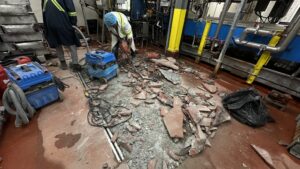
A comprehensive balcony waterproofing restoration typically involves: removing all finish materials (tile, pavers, coating) from the balcony surface; removing the existing waterproofing membrane; inspecting and repairing the concrete substrate (including any spalling, cracks, or corrosion damage); installing a new waterproofing membrane system with proper drainage slope and details at the perimeter, drain, and wall transitions; and reinstalling finish materials. The entire process typically takes 2–5 days per balcony depending on size and complexity. See our concrete repair services for structural repairs done as part of balcony restoration, and visit our FAQ for more on balcony waterproofing in Vancouver strata buildings.
Contact Miyagi Construction for a free site assessment at estimate@miyagiconstruction.com or call (778) 513-7471.
Additional Resources
For more information on concrete standards and construction safety in British Columbia, visit WorkSafeBC and the CSA Group for industry standards and guidelines.
Get a Free On-Site Assessment
Tell us about your project and we'll get back to you within 24 hours. No obligation, no pressure.