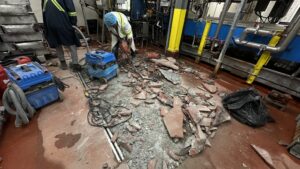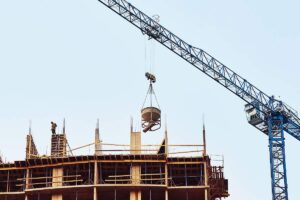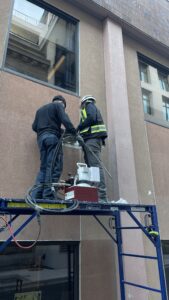
Metro Vancouver’s commercial parkade inventory includes a significant number of post-tension concrete structures built in the 1970s through 1990s that are now 30–50 years old. These structures often require comprehensive restoration — addressing not just waterproofing and concrete spalling, but also the post-tension system itself, which has deteriorated through decades of moisture infiltration, carbonation, and in many cases chronic deicing salt application. Managing these complex restoration projects requires specialized expertise in both structural engineering and construction.
The Challenge of Aging PT Parkade Structures
Post-tension parkades built 30–50 years ago were designed and constructed under standards that have since been significantly strengthened, and in many cases with corrosion protection details that are now recognized as inadequate for BC’s coastal environment. Tendon sheathing materials of that era (greased strand in paper wrapping, for example, rather than modern HDPE-sheathed monostrand) provide substantially less corrosion protection than current systems. Anchor hardware and pocket details that were standard practice in the 1970s and 1980s allowed moisture access that current construction does not permit.
The result is a generation of PT parkade structures with significant tendon corrosion at anchor zones, locally failed tendons, and in some cases widespread tendon section loss requiring comprehensive structural assessment before any repair scope can be defined. Our post-tension restoration team has experience with this generation of structures throughout Metro Vancouver.
Assessment Framework for Aging PT Parkades
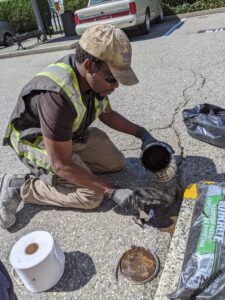
A comprehensive restoration assessment for an aging PT parkade includes a systematic visual inspection of all accessible anchor heads and anchor pocket zones, mapping of all slab cracks and distress patterns, half-cell potential survey to assess the probability of active corrosion across the slab, carbonation testing and chloride sampling from representative core locations, and selective anchor pocket opening to directly inspect tendon and anchor hardware condition in representative zones.
The findings of this assessment provide the structural engineer with the data needed to evaluate the remaining structural capacity of the PT system, identify tendons requiring replacement, and determine whether the structure can safely remain in occupancy during phased repairs or requires temporary load restrictions or shoring.
Integrating PT Restoration with Parkade Waterproofing
Aging PT parkade restoration almost always involves both structural PT work and complete waterproofing restoration. Addressing only the PT system without replacing the failed waterproofing will result in continued moisture infiltration that accelerates corrosion of the repaired and remaining tendons. Conversely, installing a new membrane over a PT structure with active tendon failures risks future membrane disruption as structural distress progresses.
Our integrated approach combines structural PT repair under engineering direction with comprehensive parkade waterproofing and resurfacing in a single coordinated project. See our FAQ for more on planning a comprehensive PT parkade restoration in Metro Vancouver.
Contact Miyagi Construction for a free site assessment at estimate@miyagiconstruction.com or call (778) 513-7471.
Additional Resources
For more information on concrete standards and construction safety in British Columbia, visit National Research Council Canada and the CSA Group for industry standards and guidelines.
Get a Free On-Site Assessment
Tell us about your project and we'll get back to you within 24 hours. No obligation, no pressure.