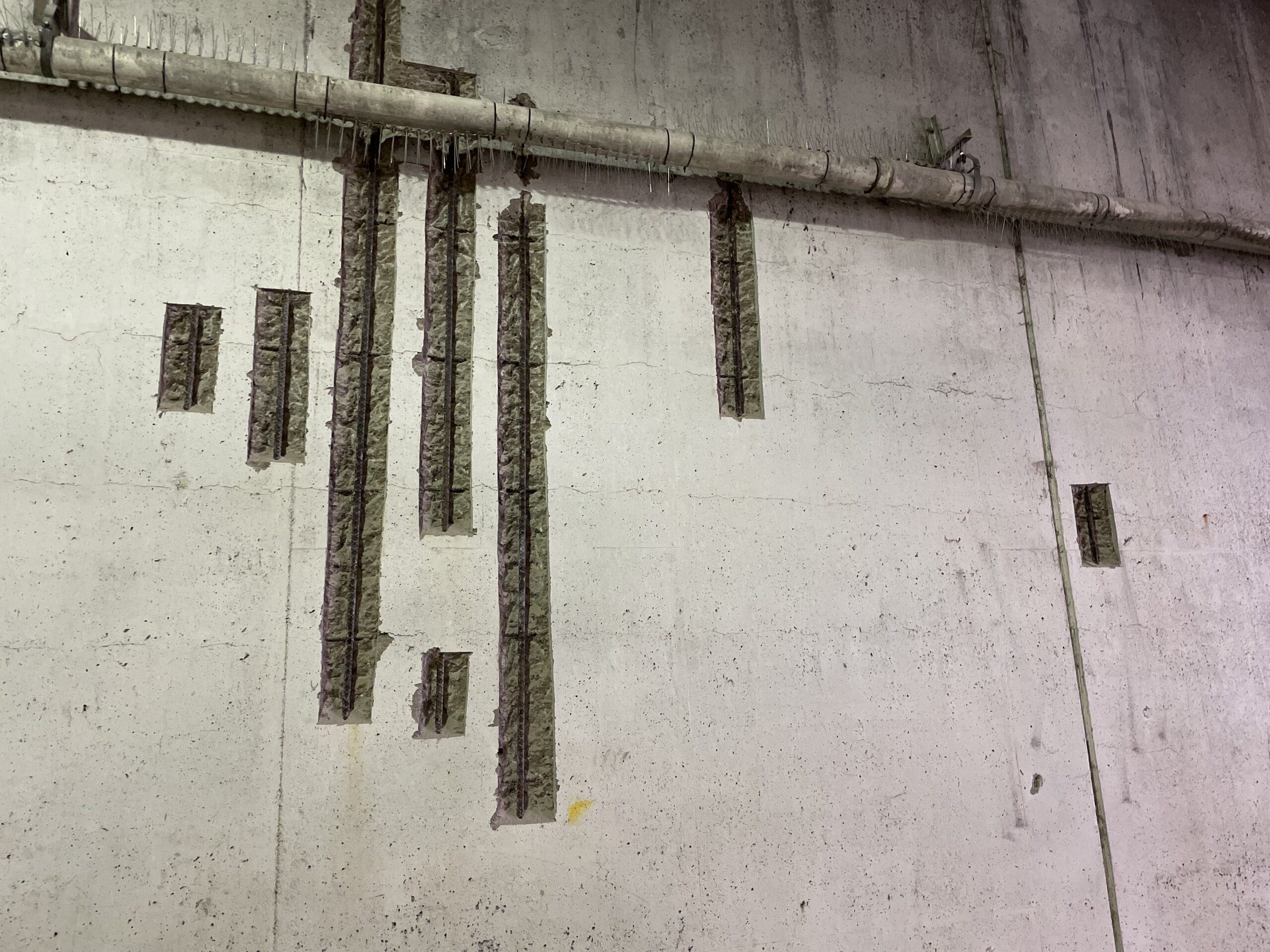
Post-tension concrete slabs crack far less frequently than conventionally reinforced slabs — one of the primary advantages of the PT system is that the pre-compression from tensioned cables reduces or eliminates the tensile stresses that cause cracking in ordinary concrete. When cracking does appear in a post-tension slab, it is therefore more significant and warrants more careful attention than the routine shrinkage cracking expected in conventional concrete structures.
Why Post-Tension Slabs Should Crack Less
The purpose of post-tensioning is to place the concrete into a state of compression throughout its cross-section — so that even when bending loads are applied, the tensile stresses generated never exceed the compressive pre-stress. If the PT system is properly designed and installed, the slab should remain essentially crack-free under normal service loads. Cracking in a PT slab therefore indicates either that the pre-stress is inadequate (due to design error, construction error, or tendon loss), that loads are exceeding the design intent, or that other mechanisms (thermal movement, settlement, or construction-related effects) are generating stresses the pre-compression cannot prevent.
Common PT Slab Crack Patterns and Their Causes
Banded cracking perpendicular to the tendon direction is characteristic of insufficient pre-stress force in that tendon direction — either because the tendon was not stressed to the correct force, or because prestress has been lost due to anchor slip, corrosion, or tendon failure. This pattern warrants investigation of the anchor heads and tendon condition in the cracked zone. Our post-tension repair services include assessment of slab cracking patterns.
Punching shear cracks — typically circular or star-shaped patterns radiating from a column head through the slab — indicate that the slab-to-column connection is being overstressed. This is a serious structural condition requiring immediate engineering assessment. Diagonal cracks near slab edges or openings may indicate stress concentration at re-entrant corners or openings in the slab. Construction-related cracks (random, fine pattern cracking in the upper slab surface) are often caused by plastic shrinkage before the PT is stressed and are generally less structurally significant.
When to Seek Engineering Assessment
Any crack in a post-tension slab that is wider than 0.3mm, shows displacement across the crack, is associated with visible slab deflection, or follows a pattern suggesting structural distress (punching shear, banded prestress loss) requires immediate engineering assessment. Do not attempt to seal or patch PT slab cracks without engineering review — sealing a crack in a structurally distressed slab can mask progressive failure. See our concrete repair services for work in PT structures and our FAQ for guidance on crack assessment in Vancouver PT buildings.
Contact Miyagi Construction for a free site assessment at estimate@miyagiconstruction.com or call (778) 513-7471.
Additional Resources
For more information on concrete standards and construction safety in British Columbia, visit National Research Council Canada and the CSA Group for industry standards and guidelines.
Get a Free On-Site Assessment
Tell us about your project and we'll get back to you within 24 hours. No obligation, no pressure.