Post-tension concrete structures in Metro Vancouver are built with one of two tendon systems: unbonded or bonded (grouted). The distinction between these two systems has significant implications for how the structure behaves, how it deteriorates, and critically — how it must be repaired when corrosion or damage occurs. Understanding this difference is essential for anyone managing a post-tension building’s maintenance and repair.
Unbonded Post-Tension Systems
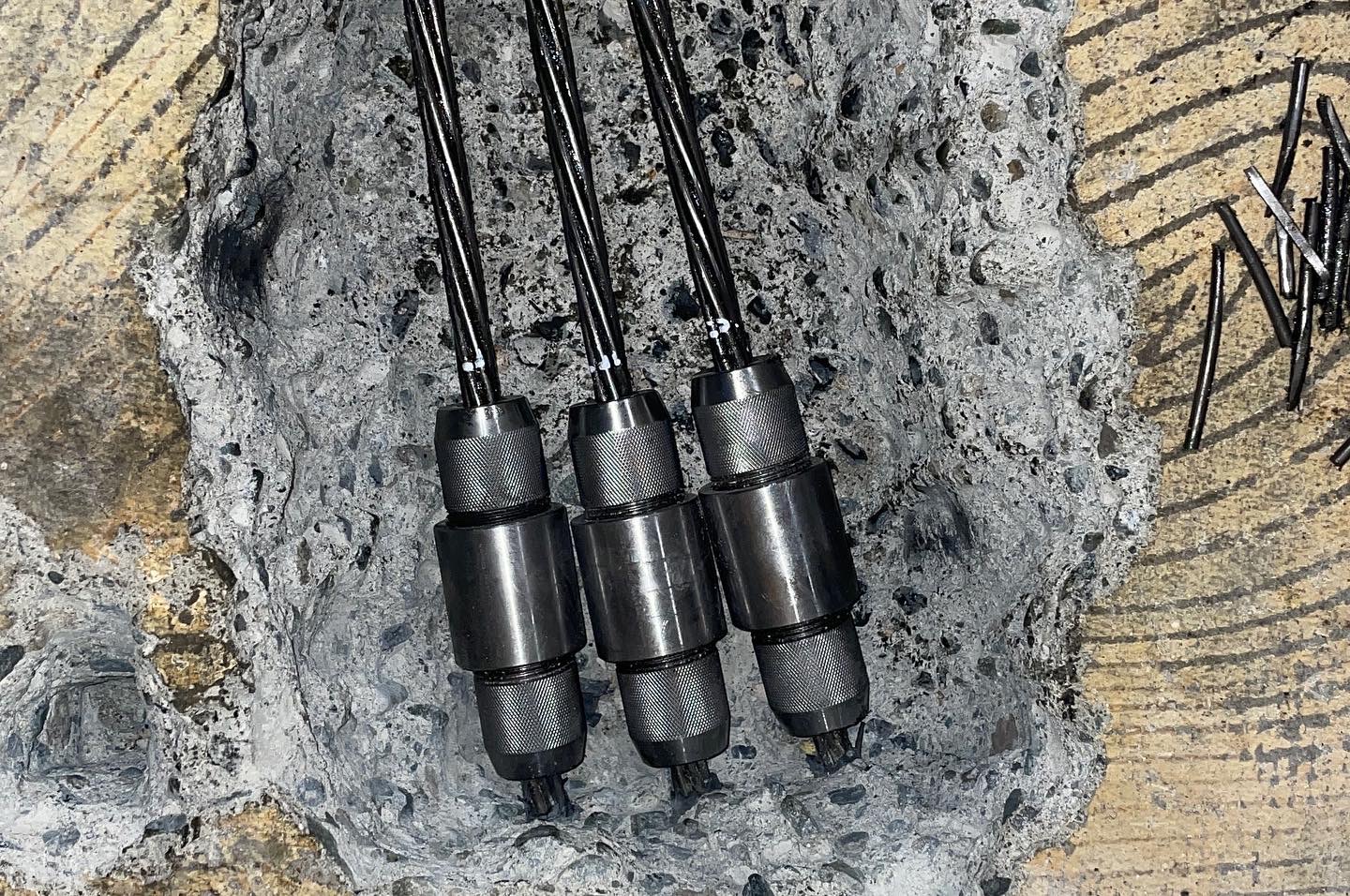
Unbonded post-tension is by far the most common system used in Metro Vancouver residential and commercial buildings. In an unbonded system, each tendon is a single length of 7-wire strand enclosed in a plastic (HDPE) sheathing filled with corrosion-inhibiting grease. The sheathing prevents the strand from bonding to the surrounding concrete — the only connection points are the anchor heads at each end of the tendon.
The advantage of the unbonded system is its simplicity and construction speed. The critical implication for repair is that a single strand failure (at any point along its length) affects the full force of the entire tendon, since the strand is not bonded to the concrete at intermediate points. If a tendon is severed anywhere — through a saw cut, core drill, or corrosion — the prestress force is lost along the entire tendon length. This makes inadvertent strand cutting in unbonded systems particularly consequential. Our post-tension repair team always performs tendon location surveys before any cutting or coring in PT slabs.
Bonded (Grouted) Post-Tension Systems
Bonded PT systems use tendons (typically multiple wires or strands in a corrugated steel or plastic duct) that are grouted after tensioning to bond the tendon to the duct and through it to the surrounding concrete. The grout provides corrosion protection and, critically, creates bond between the tendon and concrete along the full length of the duct.
Bonded systems are more common in large bridges, infrastructure, and some commercial structures — they are less common in Metro Vancouver’s residential strata buildings but do appear in some larger commercial developments. In a bonded system, local damage (such as a corroded section) affects only the local capacity — the bond transfers forces around the damaged zone. However, duct grout voids (where the duct was not fully filled with grout during original construction) are a common problem and create zones of unprotected tendon exposure that are particularly vulnerable to corrosion.
Repair Strategies for Each System
Repair of unbonded PT typically involves either protecting compromised anchor heads (before tendon failure) or replacing individual tendons (after failure or at high risk of failure). Tendon replacement is a significant structural operation requiring temporary shoring and careful phasing. Repair of bonded PT is more complex because the tendon location and condition must be assessed through the duct, and local repairs may require opening the duct and re-grouting. Both systems require structural engineering oversight for all repair work. See our parkade services for related restoration work and our FAQ for more on post-tension repair in Metro Vancouver.
Contact Miyagi Construction for a free site assessment at estimate@miyagiconstruction.com or call (778) 513-7471.
Additional Resources
For more information on concrete standards and construction safety in British Columbia, visit National Research Council Canada and the CSA Group for industry standards and guidelines.
Get a Free On-Site Assessment
Tell us about your project and we'll get back to you within 24 hours. No obligation, no pressure.