Post-tension anchor head repair is one of the most technically demanding tasks in structural concrete restoration — and one of the most important. The anchor head is the critical connection point where the prestressed tendon’s force is transferred into the concrete structure. When anchor components corrode, crack, or fail, the structural integrity of the tendon — and potentially the slab — is compromised. Here is what post-tension anchor head repair involves and what you should expect from a qualified contractor.
Why Anchor Heads Fail in Metro Vancouver Buildings
Anchor head corrosion in Metro Vancouver buildings almost always results from moisture infiltration — either through failed waterproofing on the parkade deck above, through the slab edge, or through inadequate or missing anchor pocket covers. Once moisture reaches the anchor hardware, corrosion of the wedge grips is particularly dangerous: the hardened steel wedge grips that lock the strand in the anchor casting are susceptible to stress corrosion cracking (SCC), a form of delayed fracture that can cause sudden, brittle failure without the progressive warning signs of ordinary rusting.
Anchor pockets that have been left open (covers missing) or filled with inappropriate materials (standard concrete rather than grout matched to the anchor pocket requirements) are common deficiencies in older buildings that create pathways for ongoing moisture infiltration.
The Anchor Head Repair Process
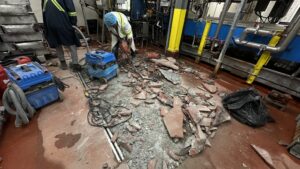
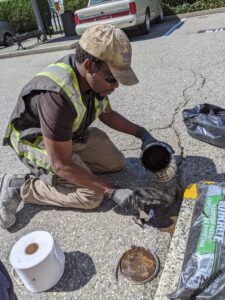
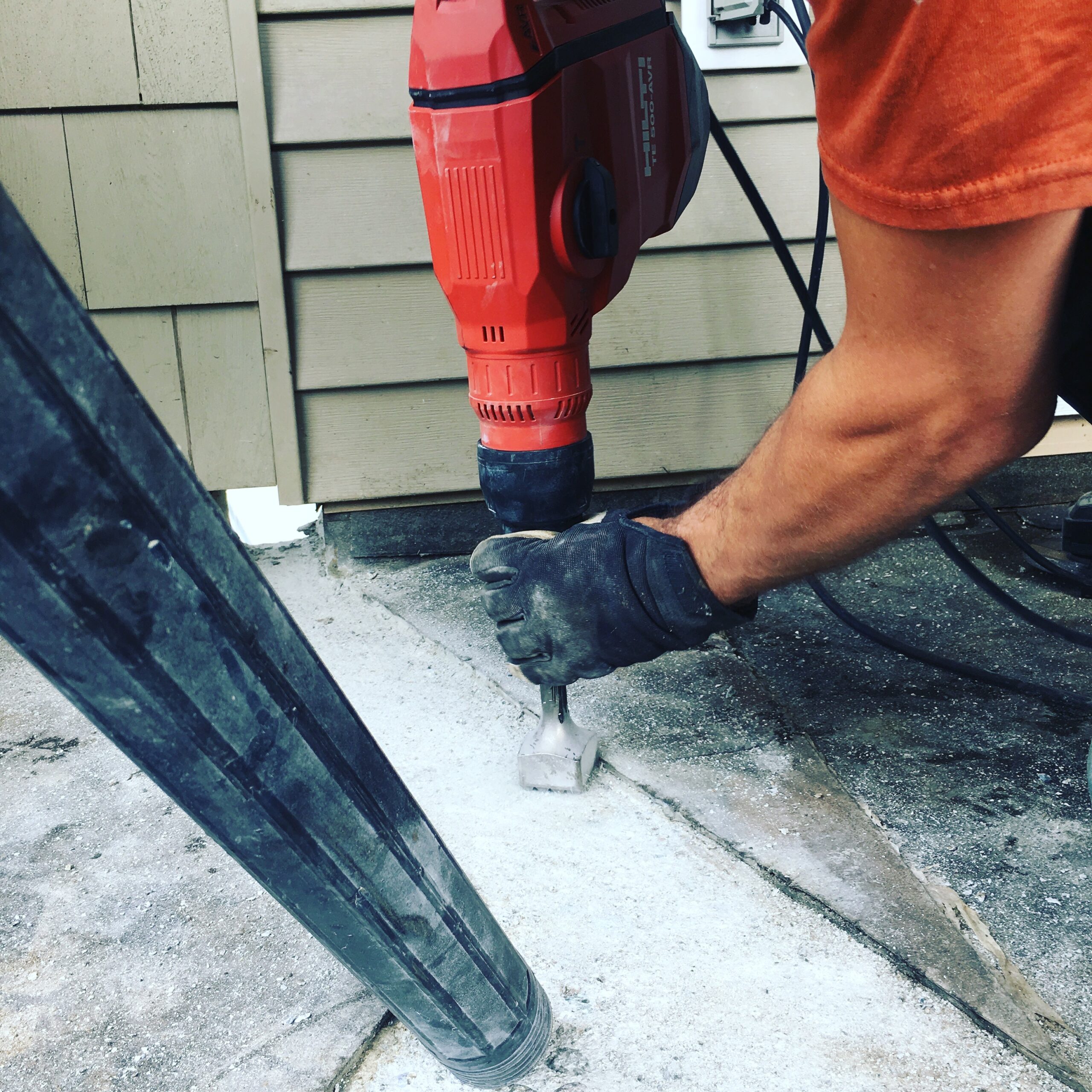
Post-tension anchor head repair begins with a careful assessment of each affected anchor. This involves opening the anchor pocket (if covered), cleaning the area, and visually and physically inspecting the anchor casting, bearing plate, wedge grips, and exposed strand length. Where stress corrosion cracking or significant section loss is suspected, additional testing — such as dye penetrant inspection or selective wire sampling — may be required.
For anchors with corrosion that has not yet compromised the wedge grip, the repair typically involves cleaning, applying a corrosion-inhibiting treatment, and resealing the anchor pocket with an appropriate repair mortar and cap detail that prevents further moisture ingress. For anchors where wedge grip condition is questionable or the strand has insufficient remaining capacity, a more involved repair including re-stressing or tendon replacement may be required. These repairs are performed under the direction of a structural engineer. Learn about our full post-tension cable repair capabilities.
Safety Protocols During Anchor Head Repair
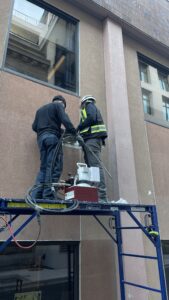
Working on or near live post-tension anchors requires strict safety protocols. The area behind and in front of the tendon must be cleared of personnel before any work that could cause sudden tendon release. Tools and equipment must be positioned and used in ways that cannot cut or damage the tendon or its sheathing. All post-tension repair work by our team is conducted under a project-specific safety plan reviewed and approved by our structural engineering partner. See our parkade waterproofing services for related work that often accompanies PT anchor repairs, and our FAQ for more on post-tension safety.
Contact Miyagi Construction for a free site assessment at estimate@miyagiconstruction.com or call (778) 513-7471.
Additional Resources
For more information on concrete standards and construction safety in British Columbia, visit National Research Council Canada and the CSA Group for industry standards and guidelines.
Get a Free On-Site Assessment
Tell us about your project and we'll get back to you within 24 hours. No obligation, no pressure.