Post-tension cable failures in commercial buildings are more common than many property owners realize — and identifying them early is critical to preventing both costly structural deterioration and serious safety incidents. Unlike conventional rebar corrosion, which gives relatively gradual visual warning through spalling and rust staining, post-tension failures can have less obvious external signs until the damage is significant. Knowing what to look for can make the difference between a targeted repair and a major structural restoration.
Visual Warning Signs at Anchor Heads
The most visible indicators of post-tension distress are typically found at the anchor ends — the slab edges and pockets where the tendons are anchored after tensioning. Signs include: rust staining or rust streaks running from anchor pocket areas on the slab edge; concrete spalling or cracking around anchor pockets; visible corrosion of the anchor hardware, bearing plate, or wedge assembly; and white efflorescence deposits around anchor areas indicating moisture infiltration through the anchor zone.
Anchor pocket covers are sometimes missing or cracked in older buildings, leaving the anchor hardware exposed to moisture. Even brief exposure of unprotected post-tension anchors to Metro Vancouver’s wet climate initiates corrosion of the wedge grips and bearing plates — the critical components that maintain tendon tension. Our post-tension repair services address anchor head corrosion before it compromises tendon integrity.
Slab-Level Warning Signs
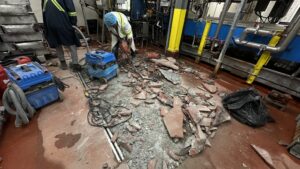
Post-tension cable failures that have progressed beyond the anchor zone produce characteristic distress patterns in the slab itself. A failed or heavily corroded tendon loses its prestress force, which can cause the slab to deflect more than designed, crack in characteristic banding patterns perpendicular to the tendon direction, or develop widening cracks at column-to-slab connections. In severe cases of multiple tendon failures, visible sag may be detectable in the slab profile.
Unusual crack patterns in a post-tension slab should always be assessed by a qualified structural engineer or post-tension specialist. Random cracking in a PT slab is much less common than in conventional concrete — when it does appear, it is a significant signal that requires investigation rather than routine crack sealing. Our team assesses slab crack patterns as part of post-tension condition evaluations.
When to Call for a Post-Tension Assessment
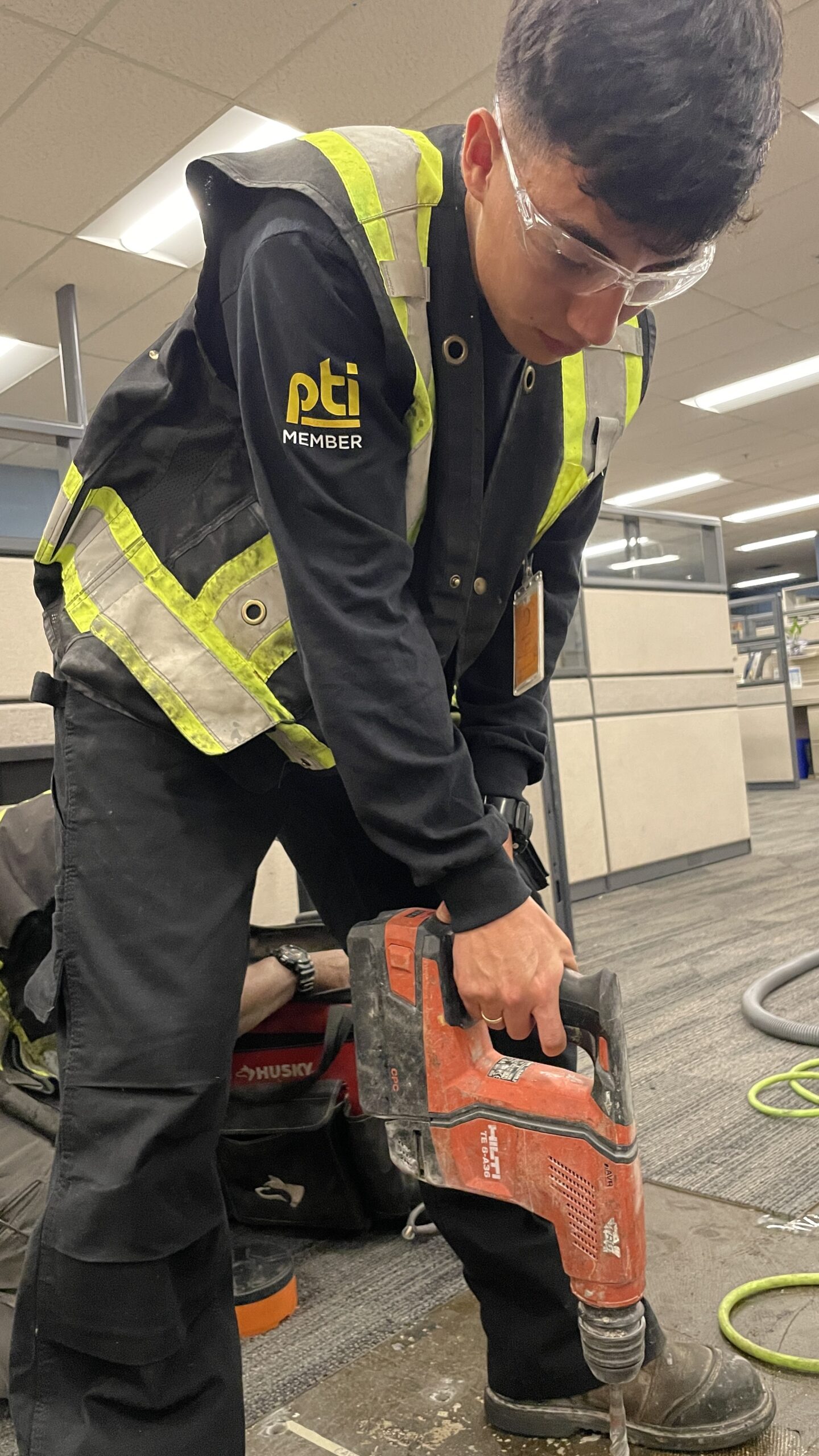
Schedule a professional post-tension assessment if you observe any of the warning signs described above, if your building is over 15 years old and has never had a PT-specific inspection, or if you are planning any work that involves cutting, coring, or anchoring into the slab. A PT assessment includes anchor head inspection, slab crack mapping, and where indicated, non-destructive testing or selective anchor pocket opening to evaluate tendon condition. See our full post-tension cable repair services and learn about related parkade restoration work that may be needed alongside PT repairs. Visit our FAQ for more on the assessment process.
Contact Miyagi Construction for a free site assessment at estimate@miyagiconstruction.com or call (778) 513-7471.
Additional Resources
For more information on concrete standards and construction safety in British Columbia, visit National Research Council Canada and the CSA Group for industry standards and guidelines.
Get a Free On-Site Assessment
Tell us about your project and we'll get back to you within 24 hours. No obligation, no pressure.