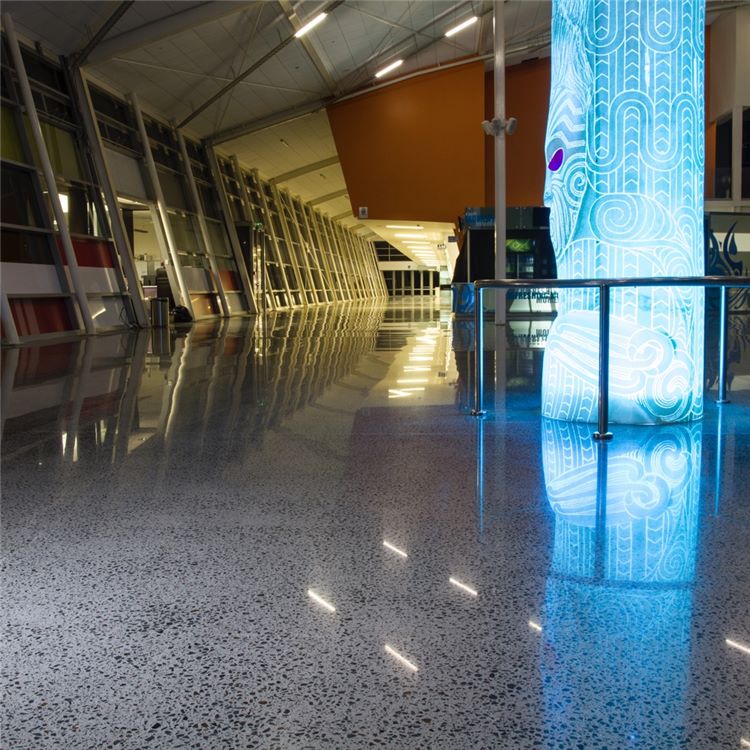
Slip-and-fall incidents on wet parkade ramps, stairs, and pedestrian walkways are a significant safety and liability concern for strata corporations and commercial property owners throughout Metro Vancouver. Anti-slip epoxy coatings are one of the most effective means of reducing this risk — providing a durable, permanently textured surface that maintains traction even when wet. Understanding how these systems work, what options are available, and how they are properly specified is important for anyone managing a commercial or strata parkade.
How Anti-Slip Epoxy Systems Work
Anti-slip epoxy coatings incorporate abrasive aggregate — typically aluminium oxide, silicon carbide, or quartz sand — into or onto the epoxy surface to create a rough texture that provides traction under foot and tire. The aggregate can be incorporated by broadcasting it into the wet topcoat (a broadcast aggregate system) or by mixing it into the coating prior to application (a blended aggregate system). Broadcast systems provide higher aggregate density at the surface and greater slip resistance, while blended systems provide more consistent, even texture.
The grade and size of the aggregate selected determines the degree of slip resistance. Coarser aggregate provides higher friction coefficients but is harder on footwear and more difficult to clean. Finer aggregate provides more moderate slip resistance with better cleanability — typically appropriate for pedestrian areas. The right aggregate specification depends on the specific application, traffic type, and cleaning requirements of the area.
Applications in Parkade Environments
Anti-slip epoxy coatings are particularly important in several parkade locations: entry and exit ramps, which see vehicle traffic at slope angles that amplify stopping distance requirements; stairwells, where wet concrete treads create significant fall risk; pedestrian crosswalk areas within the parkade, where foot traffic crosses vehicle drive lanes; and elevator lobby floors, which often become wet from umbrella drip and tracked-in moisture.
Our floor coating services include anti-slip systems for all these applications, specified and installed to meet or exceed BC Building Code traction requirements. When anti-slip coating is combined with waterproofing membrane installation, the ramp and stair surfaces can be addressed as part of a comprehensive parkade restoration project. See our parkade resurfacing services for details on integrated coating and waterproofing projects.
Maintenance of Anti-Slip Coatings
Broadcast aggregate anti-slip surfaces require more attentive cleaning than smooth epoxy surfaces — grit and debris can accumulate in the aggregate texture and reduce slip resistance over time. Regular sweeping and periodic pressure washing maintains the surface’s traction performance. In parkade environments, sand and grit tracked in from outside are common contamination sources that must be managed through regular cleaning and entry mat maintenance. Visit our FAQ for more on anti-slip coating specification and maintenance.
Contact Miyagi Construction for a free site assessment at estimate@miyagiconstruction.com or call (778) 513-7471.
Additional Resources
For more information on concrete standards and construction safety in British Columbia, visit WorkSafeBC and the CSA Group for industry standards and guidelines.
Get a Free On-Site Assessment
Tell us about your project and we'll get back to you within 24 hours. No obligation, no pressure.