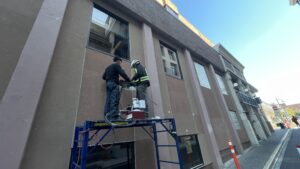

Budgeting accurately for concrete repair in a strata building requires understanding what drives project cost, what to expect from contractor quotes, and how to align the budget with the strata’s reserve fund planning cycle. Getting this right avoids both the trap of underbudgeting — leading to scope cuts or special levies mid-project — and overbudgeting that unnecessarily burdens owners’ reserve fund contributions.
Key Cost Drivers in Strata Concrete Repair
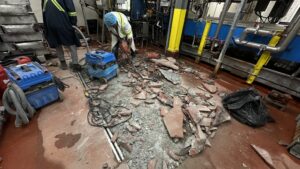
The single most important factor in concrete repair project cost is the extent of the damage — specifically, the quantity of concrete that needs to be removed and replaced. Parkade soffit repairs are priced per square foot or square metre of repair area, and the actual area is often not known with precision until the delaminated concrete is fully removed (since delamination can extend further than what is visible from the surface). A well-prepared budget should include a contingency — typically 15–25% — to account for this common scenario.
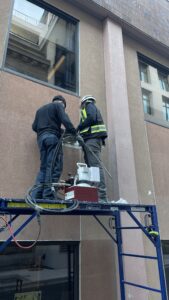
Other significant cost drivers include: access requirements (scaffolding, swing staging, or aerial lifts for soffit work); material costs (structural repair mortars are considerably more expensive than general concrete); crew mobilization and project management; traffic management and parking logistics in an occupied strata building; and the need for engineering inspection or testing during the repair process. Our concrete repair services include transparent itemized quotes that clearly explain each cost component.
How to Get Comparable Quotes
The most common budgeting mistake strata councils make is comparing quotes that are based on different assumptions about scope, materials, and method. When quotes vary widely — as they often do for concrete repair projects — it may indicate that different contractors are assuming different quantities, using different materials, or including different services.
To get genuinely comparable quotes, either have a professional engineer or experienced consultant prepare a tender document with a defined scope, or share a common condition assessment report with all bidding contractors and ask each to base their quote on the same assessment findings. This allows apples-to-apples comparison and helps identify outliers that are either missing scope or padding prices.
Reserve Fund Planning for Concrete Repair
Strata buildings with accurate depreciation reports that reflect current parkade conditions are best positioned to fund concrete repair from reserves without special levies. The depreciation report should project waterproofing replacement and concrete repair costs based on current assessment data — not just assumptions about original design life. Reserve fund contributions should be set to ensure adequate funds are available when the projected repairs fall due.
For stratas that are behind on reserve fund planning, our team can provide condition assessments and cost projections that support depreciation report updates. See our parkade resurfacing services and FAQ for more on budgeting and reserve fund planning for parkade repair projects.
Contact Miyagi Construction for a free site assessment at estimate@miyagiconstruction.com or call (778) 513-7471.
Additional Resources
For more information on concrete standards and construction safety in British Columbia, visit BC Housing and the WorkSafeBC for industry standards and guidelines.
Get a Free On-Site Assessment
Tell us about your project and we'll get back to you within 24 hours. No obligation, no pressure.