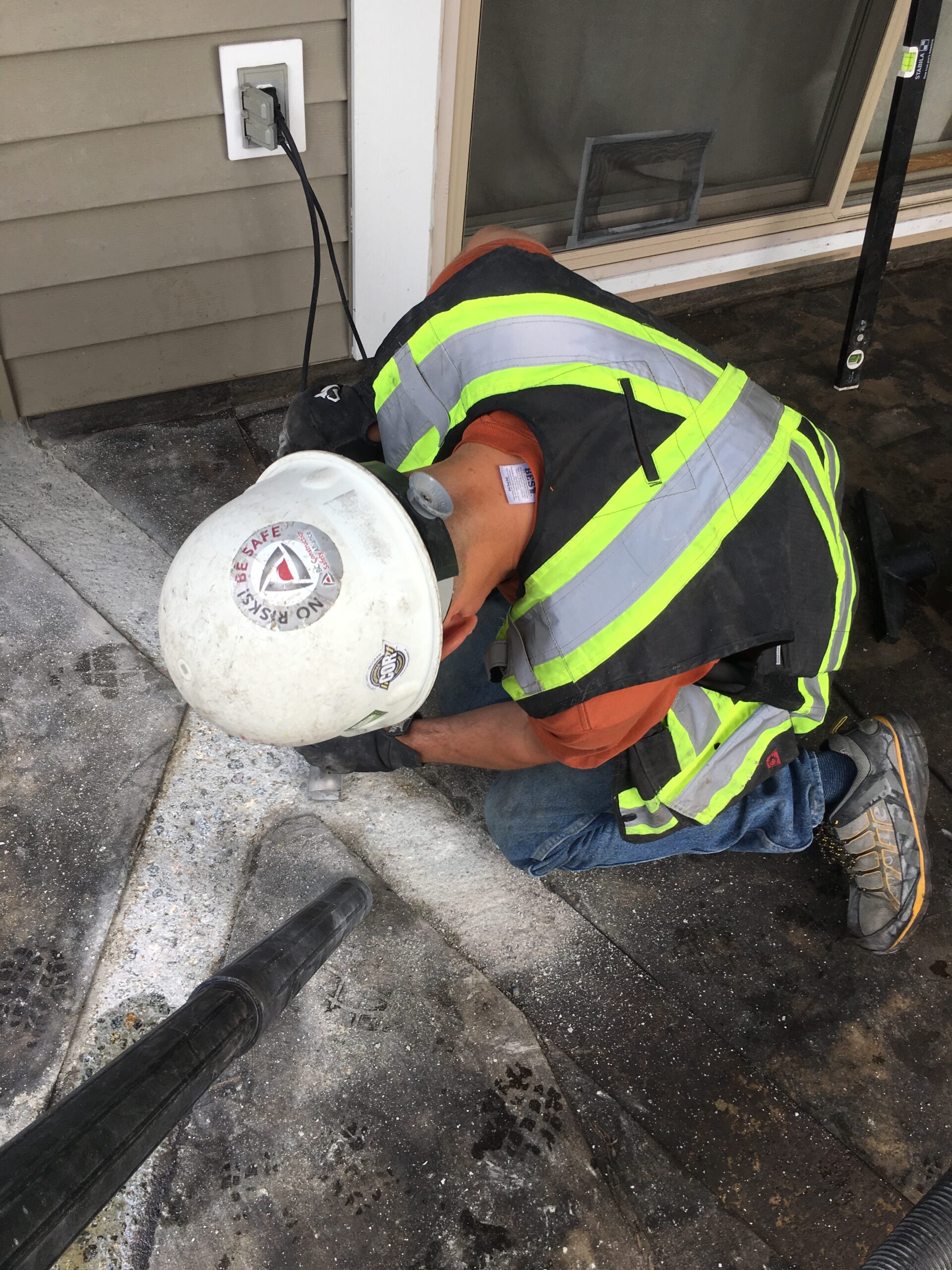
Delamination in concrete floors and decks is one of the most common — and often most misunderstood — defects encountered in parkade and commercial concrete restoration. It refers to the separation of a concrete layer from the material beneath it, creating a void or hollow zone within the concrete assembly. Understanding what causes delamination, how to detect it, and when it requires repair is important for building owners, strata councils, and property managers dealing with aging concrete structures.
What Causes Concrete Delamination?
Delamination in concrete occurs through several different mechanisms depending on the context. In concrete floor slabs, the most common cause is premature finishing — when a floor is troweled closed at the surface while bleed water is still migrating upward through the concrete below. The trapped bleed water creates a weak, high water-to-cement ratio zone immediately below the finished surface, which eventually separates under traffic and thermal cycling.
In parkade decks and soffits, delamination is most often caused by rebar corrosion. As corrosion products accumulate around the reinforcing steel, they generate internal pressure that debonds the concrete cover from the substrate. This subsurface debonding is detectable by hammer sounding before visible cracking or spalling appears. Early detection of delamination allows for proactive repair before structural concrete loss occurs. Our concrete repair services address delamination at all stages.
Detecting Delamination in Concrete
The primary method for detecting concrete delamination is hammer sounding — systematically tapping the concrete surface with a hammer and listening for the distinctive hollow sound that indicates a void beneath the surface. Solid, well-bonded concrete produces a sharp, ringing tap; delaminated concrete produces a dull, hollow sound. Hammer sounding can be done with a simple steel hammer on accessible surfaces, or with specialized chain drag or roller equipment for large areas.
Infrared thermography is an advanced tool used for detecting delamination in large deck areas — delaminated zones have different thermal mass than solid concrete, creating detectable temperature differences that show up in infrared images. This method can cover large areas quickly and identify delamination that is too subtle for hammer sounding to detect reliably.
Repairing Delaminated Concrete
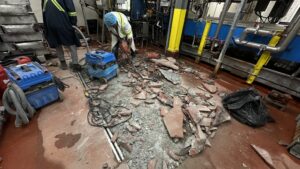
The appropriate repair method depends on the cause and extent of the delamination. For corrosion-driven delamination in parkade soffits and beams, full-depth removal of the delaminated zone is required, followed by rebar treatment and restoration with structural repair mortar. For surface delamination in floor slabs caused by premature finishing, grinding off the weak surface layer and applying an overlay or coating may be appropriate if the substrate below is sound.
In all cases, addressing the cause of delamination — not just the symptom — is critical to preventing recurrence. For parkade structures, this means ensuring the waterproofing is functioning properly to prevent further moisture ingress. See our parkade resurfacing services for information on membrane replacement, and our FAQ for guidance on concrete repair project planning.
Contact Miyagi Construction for a free site assessment at estimate@miyagiconstruction.com or call (778) 513-7471.
Additional Resources
For more information on concrete standards and construction safety in British Columbia, visit CSA Group and the WorkSafeBC for industry standards and guidelines.
Get a Free On-Site Assessment
Tell us about your project and we'll get back to you within 24 hours. No obligation, no pressure.