A concrete condition assessment report is the foundation of any parkade or structural concrete repair project. For strata councils, property managers, and building owners who receive these reports, understanding what the findings mean — and what they imply for repair scope and budget — is essential for making informed decisions. This guide walks through the key components of a typical condition assessment report and explains what to look for.
What a Condition Assessment Report Contains
A professional concrete condition assessment report for a parkade or structural concrete element typically includes a description of the inspection methodology, a condition map showing the location and extent of defects, test results (such as carbonation depth, chloride content, and concrete compressive strength), photographic documentation, and conclusions with repair recommendations. The report should clearly distinguish between urgent repairs — those affecting structural integrity or safety — and maintenance repairs that can be scheduled on a planned timeline.
Condition maps are particularly valuable because they visually communicate the extent of deterioration throughout the structure. Areas of delamination, active spalling, crack locations, and previous repair zones are typically shown on plan and elevation drawings of the parkade. These maps form the basis for developing a repair scope and budget. Our concrete repair team uses condition mapping as standard practice on all projects.
Key Terminology in Condition Assessment Reports
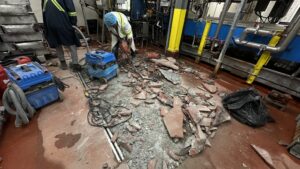
Several technical terms appear consistently in concrete condition assessment reports. Delamination refers to the separation of a concrete layer from the substrate due to internal corrosion pressure or bond failure — often detectable by hollow sound when the surface is tapped with a hammer. Carbonation is the process by which atmospheric carbon dioxide reacts with calcium hydroxide in concrete, lowering pH and removing the passive protection that prevents rebar corrosion. Spalling is the physical loss of concrete material from a surface, typically driven by the expansive force of corroding rebar. Half-cell potential is an electrochemical measurement used to assess the probability of active rebar corrosion in a given area.
Understanding Repair Recommendations
The repair recommendations section of a condition assessment report should distinguish between short-term emergency repairs, medium-term planned repairs, and long-term maintenance items. Emergency repairs typically involve areas where spalling poses an immediate safety risk — loose concrete that could fall on vehicles or occupants. Planned repairs are those where corrosion is active but has not yet caused visible concrete failure. Maintenance items are areas where preventive treatment — such as applying a penetrating sealer or waterproofing — would extend the service life of the structure.
Understanding these distinctions helps strata councils prioritize spending and develop realistic multi-year maintenance budgets. For parkade structures, the assessment should also evaluate the condition of the waterproofing membrane and drainage system — because concrete repair without addressing waterproofing simply sets the stage for the same problems to recur. Our parkade resurfacing services address both elements. Visit our FAQ for more guidance on interpreting assessment reports and planning repair projects.
Contact Miyagi Construction for a free site assessment at estimate@miyagiconstruction.com or call (778) 513-7471.
Additional Resources
For more information on concrete standards and construction safety in British Columbia, visit BC Construction Safety Alliance and the CSA Group for industry standards and guidelines.
Get a Free On-Site Assessment
Tell us about your project and we'll get back to you within 24 hours. No obligation, no pressure.