Parkade Membrane Replacement BC: A Complete Planning Guide for Strata Councils
Parkade membrane replacement is one of the most significant capital projects a BC strata corporation will undertake. When executed well, a new membrane system protects the structural concrete for 15–25 years and can be planned within normal depreciation reserve cycles. When deferred, the resulting structural damage can escalate into projects costing several times the original membrane replacement price. This guide walks strata councils through the key decisions involved in planning a successful parkade membrane replacement in British Columbia.
When Is It Time to Replace Your Parkade Membrane?
Parkade membranes don’t always fail dramatically — often, deterioration is gradual and not visible from the driving surface. Indicators that a membrane system is approaching or past end of life include:
- Active water infiltration or staining on the soffit (underside) of the parkade slab
- Visible cracking, bubbling, or delamination of the membrane surface coating
- Spalling concrete on the soffit, indicating that water has reached the rebar
- Deteriorated or missing expansion joint sealants
- A membrane age of 15+ years without major rehabilitation
A professional condition assessment — including core samples, adhesion testing, and moisture meter readings — provides an objective basis for the strata council’s decision to repair or replace.
Types of Parkade Waterproofing Membranes
Several membrane system types are commonly used in BC parkade waterproofing. Each has different performance characteristics, cost profiles, and installation requirements:
- Polyurethane traffic-bearing membranes: The most widely used system in Metro Vancouver. Applied as a liquid, they form a seamless, flexible membrane that accommodates slab movement. Typical installed thickness: 60–90 mils.
- Methyl methacrylate (MMA) systems: Fast-curing (return to traffic within hours), ideal for occupied parkades where closure time must be minimized. Higher material cost, but lower disruption cost.
- Hot-applied rubberized asphalt (HARA): Traditional system, still used in some applications. Requires more robust protection course and drainage mat over the membrane.
- Sheet-applied membranes: Pre-formed membranes (modified bitumen, TPO) used in below-grade applications.
The right system depends on your parkade’s configuration, traffic loading, closure tolerance, and budget. Our parkade resurfacing and waterproofing team can provide a comparative analysis for your project.
The Parkade Membrane Replacement Process
A complete membrane replacement project follows these phases:
- Condition assessment and design: A qualified consultant or contractor assesses the existing conditions and specifies the appropriate membrane system, details, and substrate repair scope.
- Substrate repair: Concrete spalling, rebar corrosion, and delaminated areas are repaired to provide a sound substrate for the new membrane.
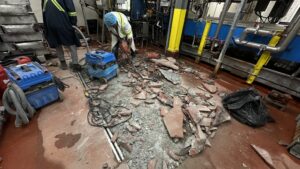
- Membrane removal: The existing failed membrane is mechanically removed by grinding or scarification.
- Surface preparation: The concrete surface is prepared by shotblasting or grinding to the profile required by the new membrane manufacturer.
- Membrane installation: The new membrane system is applied per manufacturer specifications, including primers, base coats, broadcast aggregates, and topcoats.
- Expansion joint and drain replacement: All joint sealants and drain components are replaced as part of the system.
- Quality assurance: Holiday (spark) testing and thickness measurements confirm membrane integrity.
Cost and Planning for Strata Boards in BC
Membrane replacement projects should be planned 12–18 months in advance to allow time for condition assessment, design, competitive tendering, strata approval processes, and scheduling. The project should be reflected in the strata’s depreciation report and funded through the contingency reserve fund.
Miyagi Construction has delivered parkade membrane replacement projects for strata corporations throughout Metro Vancouver. We work collaboratively with strata councils, property managers, and consulting engineers to ensure projects are completed on time, within budget, and with minimal disruption to residents.
Contact us at estimate@miyagiconstruction.com to begin the planning process for your parkade membrane replacement project.
Additional Resources
For more information on concrete standards and construction safety in British Columbia, visit BC Housing and the WorkSafeBC for industry standards and guidelines.
Get a Free On-Site Assessment
Tell us about your project and we'll get back to you within 24 hours. No obligation, no pressure.