Strata Depreciation Reports and Concrete Repair: A BC Owner’s Guide
In British Columbia, most strata corporations with five or more strata lots are required to obtain a depreciation report — a long-range planning document that inventories common property assets, estimates their remaining useful life, and projects future replacement and major repair costs. For many Metro Vancouver strata buildings, concrete repair and waterproofing represent some of the largest line items in these reports. Understanding how these items are identified, costed, and prioritized is essential for strata councils and property owners alike.
What Is a Depreciation Report and Why Does It Matter?
A depreciation report, prepared by a qualified consultant, typically looks 30 years forward and models three funding scenarios: no funding, full funding, and a benchmark funding strategy. It forces strata corporations to plan ahead for major expenditures rather than reacting to failures with emergency special levies.
Under the Strata Property Act and Strata Property Regulation, stratas must either obtain and update a depreciation report every three years or pass a special resolution annually to waive the requirement. With recent regulatory changes tightening these requirements, more BC stratas are now engaging in active long-term planning — and concrete infrastructure is consistently among the top cost categories.
Common Concrete Repair Items in BC Strata Depreciation Reports
The most frequently cited concrete-related items in depreciation reports for Metro Vancouver strata buildings include:
- Parkade waterproofing membrane replacement: Traffic-bearing membranes have a typical useful life of 15–25 years. This is often the single largest line item in a parkade-equipped strata’s depreciation report.
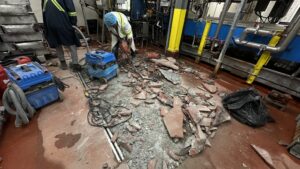
- Concrete spalling repair: Recurring maintenance cost for parkade slabs, balconies, and exposed concrete elements.
- Balcony membrane and topping replacement: Similar lifecycle to parkade membranes; often triggers unit-owner coordination and bylaw review.
- Post-tension system inspection and repair: Often overlooked but critical for parkades and podium slabs with post-tensioned structures.
- Expansion joint replacement: Sealants and expansion joints in parkade slabs, building perimeters, and facades have shorter lifecycles and require regular replacement.
Our team provides detailed concrete repair services aligned with depreciation report specifications, and our parkade waterproofing expertise helps councils get the most accurate scoping possible.
Prioritizing Concrete Repair Projects from Your Report
Not all concrete repair items identified in a depreciation report are equally urgent. Prioritization should consider:
- Safety risk: Active spalling above occupied areas, post-tension cable distress, and structural concerns should be addressed immediately regardless of depreciation report timing.
- Water infiltration damage: Active leaks cause compounding damage — each year of delay increases the total repair cost significantly.
- Asset preservation: Maintaining a sound waterproofing membrane protects the underlying concrete structure, extending the life of more expensive elements.
- Available funding: Projects should be sequenced against the contingency reserve fund balance and planned contributions.
Working with Miyagi Construction on Depreciation Report Projects
Miyagi Construction regularly works with strata councils, property managers, and depreciation report consultants to provide accurate repair cost estimates and condition assessments. Our detailed written scopes of work make it straightforward for consultants to incorporate our project pricing into updated reports.
Whether you’re in the planning stage or ready to proceed, contact us at estimate@miyagiconstruction.com to discuss how we can support your strata’s concrete repair program.
Additional Resources
For more information on concrete standards and construction safety in British Columbia, visit BC Housing and the WorkSafeBC for industry standards and guidelines.
Get a Free On-Site Assessment
Tell us about your project and we'll get back to you within 24 hours. No obligation, no pressure.