Epoxy floor coatings have become a popular choice for commercial and industrial spaces throughout Vancouver and the Lower Mainland — and for good reason. A properly specified and installed epoxy system transforms a rough, porous concrete floor into a smooth, durable, easy-to-clean surface that handles heavy traffic, chemical exposure, and demanding industrial conditions. But epoxy is not a universal solution, and making the right choice requires understanding the different system types, the critical importance of surface preparation, and what to expect in terms of performance and maintenance.
Understanding Epoxy Floor Systems
Thin-Film Epoxy Coatings
The most basic category, thin-film coatings are applied at relatively low build thickness (1–3 mils dry film thickness) and provide a cosmetic improvement over bare concrete along with modest chemical and stain resistance. These systems are appropriate for light-duty applications — retail back-of-house areas, light storage, or surface sealing — but lack the build and durability for heavy vehicle traffic or aggressive chemical exposure. They are the least expensive option but also the least durable.
High-Build Epoxy Coatings
High-build systems are applied at significantly greater thickness (10–20 mils), providing substantially better chemical resistance, impact resistance, and service life. They typically include a primer coat, high-build body coat, and a topcoat — often polyurethane or polyaspartic — that provides UV stability and additional abrasion resistance. This is the workhorse category for most commercial and light industrial applications.
Epoxy Mortar Systems
The most heavy-duty option: epoxy resin combined with graded quartz or silica aggregate to create a mortar-like material applied at 3–6mm thickness or more. Epoxy mortar systems are used to resurface severely damaged or uneven floors, provide maximum impact and abrasion resistance, and withstand heavy forklift traffic and chemical spills. They are common in food processing facilities, commercial kitchens, chemical plants, and heavy manufacturing environments.
Broadcast Systems
Decorative broadcast systems involve broadcasting colored vinyl flake chips or colored quartz aggregate into a wet epoxy basecoat, then sealing with clear topcoats. These systems are popular for commercial parkades, retail spaces, showrooms, and institutional environments. The broadcast material adds texture (improving slip resistance), hides minor surface imperfections, and creates an attractive, customizable appearance.
Surface Preparation: The Make-or-Break Factor
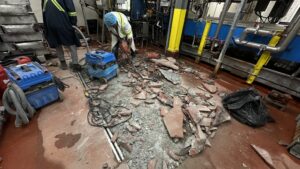
No aspect of an epoxy floor system matters more than surface preparation. Industry data consistently shows that premature epoxy failures — delamination, bubbling, peeling — are attributable to inadequate surface preparation in the overwhelming majority of cases. Proper surface preparation involves mechanical profiling via diamond grinding or shot blasting to achieve the correct surface profile (typically ICRI CSP 3–5) for mechanical adhesion; repair of all cracks and joints before coating; moisture testing of concrete using the calcium chloride or relative humidity probe method (epoxy cannot be applied over concrete with excessive moisture without specialized moisture-tolerant systems); and removal of oil, grease, curing compounds, and other contaminants. Any contractor who proposes to apply epoxy without proper mechanical preparation using industrial grinding or shot blast equipment is cutting corners that will show up as premature failure. Do not let price pressure result in a floor that fails in 2 years rather than lasting 15+.
Slip Resistance
In Vancouver commercial spaces, WorkSafeBC requires that floor surfaces provide adequate slip resistance to prevent slip-and-fall incidents. A smooth, high-gloss epoxy floor can be dangerously slippery when wet — a critical concern in any space where water, cleaning solutions, or other liquids are present. Slip resistance is addressed through aggregate broadcasts (aluminum oxide, quartz, or anti-slip granules added to topcoats), flake systems (vinyl flake broadcasts provide natural texture), or grit additives (fine anti-slip additives mixed into the topcoat). Any commercial epoxy floor system should achieve at least a rating of 36+ BPN (British Pendulum Number) in wet conditions for pedestrian areas.
Chemical Resistance
One of epoxy’s primary advantages over concrete and polished concrete is its excellent chemical resistance. Standard high-build epoxy systems withstand petroleum products (gasoline, diesel, motor oil), dilute acids and alkalis, cleaning chemicals and disinfectants, and food and beverage products. For highly aggressive chemicals — concentrated acids, solvents, or strong oxidizers — specialized chemical-resistant epoxy or polyester vinyl ester systems may be required. Always provide the actual list of chemicals present in the environment to your contractor and verify chemical resistance against the specific exposure.
Maintenance and Long-Term Performance
Epoxy floors are easy to maintain. Regular cleaning with auto-scrubbers or mops using pH-neutral cleaners keeps the surface looking good and removes debris that could scratch the topcoat. Avoid highly acidic or alkaline cleaners that can degrade the epoxy surface over time. In high-traffic areas, the topcoat will eventually show wear — spot repairs or full topcoat recoating can refresh the surface and extend overall system life at a fraction of the cost of a complete system replacement. A quality epoxy system, properly maintained, should provide 10–20 years of service life in most commercial environments.
Best Applications for Epoxy Floor Coatings in Vancouver
Epoxy systems are an excellent choice for commercial and industrial warehouses, food processing and commercial kitchens (with appropriate system specification), automotive shops and light manufacturing facilities, retail showrooms and commercial spaces requiring a clean professional appearance, institutional settings such as hospitals, laboratories, and schools, and parkade interiors for pedestrian areas and storage areas. For traffic-bearing parkade decks, specialized traffic coating systems over waterproofing membranes are the appropriate choice — a topic covered in detail in our parkade waterproofing guide.
Ready to Protect Your Property?
Miyagi Construction Ltd. has been serving property managers, strata councils, and commercial building owners across the Vancouver Lower Mainland for years. Contact us today for a free on-site estimate:
📞 778-513-7471
✉️ estimate@miyagiconstruction.com
We serve Burnaby, Vancouver, Surrey, Richmond, Coquitlam, New Westminster, and the entire Lower Mainland.
Related Services: Learn more about our industrial floor coating services, concrete polishing — or contact us at estimate@miyagiconstruction.com to request a free site assessment.
Additional Resources
For more information on concrete standards and construction safety in British Columbia, visit CSA Group and the WorkSafeBC for industry standards and guidelines.
Get a Free On-Site Assessment
Tell us about your project and we'll get back to you within 24 hours. No obligation, no pressure.